
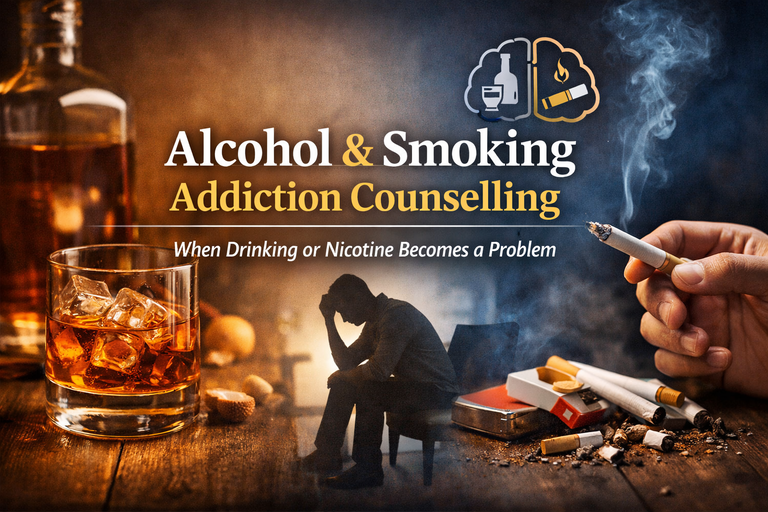
Alcohol and smoking are often socially accepted habits. A drink after work, cigarettes with friends, or smoking to manage stress may seem harmless at first. However, for many people, these habits gradually shift from occasional use to dependency—affecting physical health, mental well-being, relationships, and professional life. When drinking or nicotine use starts controlling your choices instead of the other way around, it becomes a problem that needs attention.
Alcohol and smoking addiction counselling focuses on understanding why the addiction developed, how it is maintained, and what psychological tools can help a person break free and recover sustainably. This blog explores when substance use becomes addiction, its impact, and how counselling plays a crucial role in long-term recovery.
Not everyone who drinks alcohol or smokes cigarettes is addicted. Addiction is not defined by frequency alone, but by loss of control and dependence.
Alcohol or smoking may be becoming a problem if you notice:
Difficulty stopping or reducing intake despite wanting to
Using alcohol or cigarettes to cope with stress, anxiety, anger, or sadness
Increased tolerance—needing more to feel the same effect
Withdrawal symptoms like irritability, restlessness, headaches, or cravings
Neglecting responsibilities, relationships, or health
Feeling guilty or defensive when others mention your usage
Many people delay seeking help because they believe addiction means “rock bottom.” In reality, addiction develops gradually and can be treated effectively before severe consequences occur.
Alcohol addiction, also known as Alcohol Use Disorder (AUD), is a condition where a person becomes psychologically and physically dependent on alcohol. Over time, the brain starts relying on alcohol to regulate emotions and stress.
Chronic stress and burnout
Anxiety or depression
Trauma or unresolved emotional pain
Social pressure and workplace drinking culture
Low self-esteem or difficulty expressing emotions
Alcohol may initially provide temporary relief, but long-term use worsens mental health, disrupts sleep, increases irritability, and impairs judgment.
Nicotine is one of the most addictive substances. Smoking addiction often starts casually but quickly becomes ingrained in daily routines—after meals, during breaks, or while dealing with stress.
Nicotine alters brain chemistry and dopamine release
Smoking becomes linked to emotional regulation
Behavioral triggers (tea breaks, social settings, boredom)
Fear of withdrawal symptoms or weight gain
Many smokers attempt quitting multiple times but relapse, not due to lack of willpower, but because psychological dependence is not addressed.
Liver disease, heart problems, high blood pressure
Respiratory issues, lung cancer, reduced immunity
Sleep disorders and chronic fatigue
Increased risk of diabetes and stroke
Anxiety, depression, mood swings
Poor concentration and memory issues
Increased irritability and emotional numbness
Higher risk of self-harm and impulsive behavior
Conflict with spouse, parents, or children
Loss of trust in relationships
Workplace performance issues
Social isolation or shame
Addiction rarely affects just one person—it impacts entire families. This is why counselling often involves family education and support.
One of the biggest myths around addiction is that quitting is simply about discipline. Addiction rewires the brain’s reward system, making cravings feel urgent and overwhelming.
Without addressing:
Emotional triggers
Stress coping mechanisms
Behavioral patterns
Underlying mental health concerns
…relapse becomes likely. Counselling helps individuals understand their addiction instead of fighting it blindly.
Addiction counselling is not about judgment or force. It is a collaborative, confidential, and evidence-based process that supports lasting change.
Counselling helps identify:
Emotional triggers (stress, loneliness, anger)
Situational triggers (parties, work pressure)
Thought patterns that lead to substance use
Awareness is the first step toward control.
Instead of alcohol or cigarettes, individuals learn:
Stress management techniques
Emotional regulation strategies
Relaxation and grounding exercises
Problem-solving skills
These tools reduce reliance on substances during difficult moments.
CBT is widely used in addiction treatment to:
Challenge distorted thinking (“I can’t relax without smoking”)
Build healthier habits
Prevent relapse by planning ahead
Counsellors teach practical strategies to:
Delay and reduce cravings
Handle urges without giving in
Prepare for high-risk situations
This empowers clients rather than leaving them feeling helpless.
Many individuals with addiction also struggle with:
Anxiety disorders
Depression
Trauma or grief
Treating addiction without addressing mental health often leads to relapse. Counselling integrates both.
Family members often feel confused, angry, or helpless. Counselling can:
Educate families about addiction
Improve communication
Reduce blame and conflict
Teach supportive (not enabling) behaviors
When families heal together, recovery becomes stronger and more sustainable.
Detox focuses on managing physical withdrawal, but does not address psychological dependence. Counselling focuses on:
Long-term behavior change
Emotional healing
Relapse prevention
Many people benefit most from a combination of medical support and psychological counselling.
Today, many individuals prefer online counselling due to:
Privacy and confidentiality
Flexible scheduling
Reduced stigma
Access from home
Both online and in-person counselling can be effective when done by a trained psychologist.
You should consider alcohol or smoking addiction counselling if:
You’ve tried quitting multiple times without success
Substance use is affecting your mental health
Loved ones are expressing concern
You feel dependent to function or relax
You fear what life would be like without it
Seeking help is not weakness—it’s self-awareness and strength.
Recovery does not mean never feeling tempted again. It means:
Understanding your triggers
Having tools to manage urges
Rebuilding confidence and self-control
Creating a healthier relationship with yourself
With the right counselling support, individuals can regain control, improve health, and rebuild relationships.
Alcohol and smoking addiction often begin quietly, but their impact can be deep and long-lasting. Counselling offers a safe, structured, and compassionate path to recovery—addressing not just the habit, but the person behind it.
If drinking or nicotine has started to feel like a necessity rather than a choice, it may be time to seek professional support. Early intervention can prevent long-term damage and help you reclaim a healthier, more balanced life.