
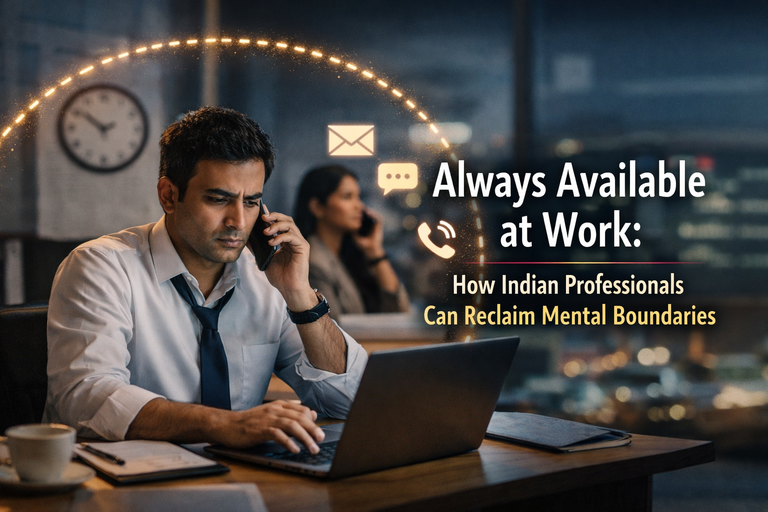
In India’s high-octane professional landscape, the line between work and life has blurred into oblivion. A 2023 Microsoft Work Trend Index report revealed that 87% of Indian professionals struggle to disconnect after hours, fueled by WhatsApp pings at midnight, endless email chains, and the cultural badge of honor for “hustle.” For doctors prepping for NEET PG, startup founders in Delhi’s bustling co-working spaces, or IT engineers in Bengaluru’s tech hubs, being “always available” isn’t just expected—it’s survival. But this constant connectivity comes at a steep cost: burnout, anxiety, and eroded mental health.
Consider Dr. Priya, a psychiatrist at a Delhi clinic (much like those at The Lifestyle Clinic). She checks patient queries at 10 PM, only to wake up exhausted, her mind replaying case files. This isn’t unique; a 2024 ICMR study linked prolonged work availability to a 40% rise in stress-related disorders among urban Indians. The pandemic accelerated this, with remote work embedding offices into bedrooms. Yet, reclaiming mental boundaries isn’t about quitting your job—it’s about intentional design. This post explores why we’re trapped, the mental toll, and actionable steps to unplug without guilt.
India’s work culture glorifies endurance. “Kaam ka pressure hai” (there’s work pressure) is a mantra from Mumbai’s finance towers to Hyderabad’s pharma labs. Hierarchical structures demand instant replies to bosses, while client-facing roles in healthcare or consulting mean 24/7 responsiveness. Add affordable data plans and apps like Slack or Zoho, and boundaries dissolve.
Psychologically, this stems from the “availability heuristic”—our brains equate quick responses with competence. In collectivist Indian society, saying “no” risks being labeled lazy or disloyal. A 2025 SHRM India survey found 62% of professionals fear career repercussions for logging off. For medical professionals, like those navigating NEET PG counseling, the stakes amplify: missing a query could mean lost opportunities in competitive specialties.
But science debunks the myth. Research from the Journal of Occupational Health Psychology shows “right to disconnect” policies in Europe boost productivity by 20%. In India, companies like Infosys are piloting “no-email-after-8 PM” rules. The key? Recognizing availability as a choice, not a chain.
Always-on culture isn’t just tiring—it’s toxic. Chronic availability triggers the HPA axis, flooding your body with cortisol. Over time, this leads to adrenal fatigue, insomnia, and weakened immunity. For Indian women professionals, who juggle 70% more unpaid home labor (per Oxfam 2024), it exacerbates gender burnout.
Mental health stats are alarming: WHO data pegs India at 15% depression prevalence among working adults, with urban professionals hit hardest. Symptoms include decision fatigue—why NEET PG aspirants second-guess ranks endlessly—and emotional exhaustion. Dr. Amit, a Gurgaon-based entrepreneur building a de-addiction center, shares: “I was always ‘on,’ replying to investors at 2 AM. It spiraled into adult ADHD-like focus issues and panic attacks.”
Neurologically, smartphones hijack dopamine loops, creating addiction. A 2025 NIMHANS study found Indian professionals average 4 hours daily on work apps outside hours, correlating with 30% higher anxiety scores. Without boundaries, work invades recovery time, starving the prefrontal cortex needed for creativity and resilience.
Reclaiming boundaries starts with awareness. Track your “always-on” habits for a week using apps like RescueTime or Screen Time (built into iOS/Android).
Log response patterns: Note midnight WhatsApp replies or email opens. Indian pros average 150 work messages daily—identify top offenders.
Quantify impact: Rate energy levels pre/post-checks. Low scores? That’s your cue.
Map triggers: Bosses? Clients? Set alerts only for true emergencies, like hospital on-calls for doctors.
This audit reveals leaks. One Mumbai banker slashed after-hours checks by 80%, reclaiming 2 hours nightly for family.
Technology enables overwork—use it to fight back.
Email/Slack auto-replies: “I’ll respond during 9 AM-6 PM IST. For urgents, call.” Tools like Gmail’s scheduled send mimic presence without availability.
Do Not Disturb (DND) rituals: Activate phone DND post-7 PM. On iPhone, allow exceptions for family; Android’s Focus Mode silences work apps.
App blockers: Freedom or Focus@Will block Slack/Teams after hours. For WhatsApp-heavy Indians, mute non-essential groups.
Workspace separation: No desk in bedroom. Invest in a ₹5,000 foldable screen for “office zones.”
A Delhi IT firm trialed this, reporting 25% burnout drop. For freelancers or NEET PG consultants, batch responses: 30 minutes twice daily.
Fear of judgment keeps us chained. Flip it with assertive scripts rooted in Indian context.
| Scenario | Sample Response |
|---|---|
| Boss’s late ping | “Noted, sir. Will action this first thing tomorrow at 9 AM. Good night!” |
| Client urgency | “Happy to prioritize—available for a quick call now, or detailed review by 10 AM?” |
| Team group | Pin a message: “Responses 10 AM-7 PM. Emergencies: Call [number].” |
| Family overlap | “Work mode on—chat after 8 PM?” |
Practice via role-play. A 2024 Harvard Business Review study shows boundary-setters earn 15% more respect. In healthcare, frame it as self-care: “Recharging ensures better patient focus.”
Boundaries need anchors. Design a “shutdown ritual” signaling end-of-day.
Digital detox hour: No screens 60 minutes before bed. Read Bhagavad Gita or meditate—apps like Calm offer 5-minute Hindi sessions.
Micro-breaks: Pomodoro with walks. Indian pros thrive on chai pauses; make them boundary-enforcers.
Hobby recharge: For your graphic design fans, 30 minutes Canva play. Medical creators? Journal case vignettes offline.
Sleep sanctuary: 7-8 hours. Blue-light blockers (₹500 on Amazon) help.
Track with journals. Dr. Priya’s ritual: Evening yoga, yielding sharper diagnostics.
Go beyond solo efforts.
Workplace advocacy: Propose “disconnect policies” in team meets. Reference Tata’s wellness mandates.
Peer accountability: WhatsApp “off-duty” pacts with colleagues.
Professional help: Therapy via The Lifestyle Clinic addresses guilt. CBT reframes “availability = value.”
For entrepreneurs, outsource: VAs for ₹15,000/month handle off-hours.
Reclaiming boundaries yields compounding gains. A 2025 Deloitte India report links them to 18% productivity spikes and innovation. NEET PG toppers who unplugged scored higher in mocks—rest restores cognition.
Imagine logging off at 6 PM, savoring street food in Delhi, or strategizing your mental health startup sans fatigue. It’s not selfish; it’s sustainable.
Start small: Pick one step today. Your future self—sharper, calmer, thriving—thanks you.