
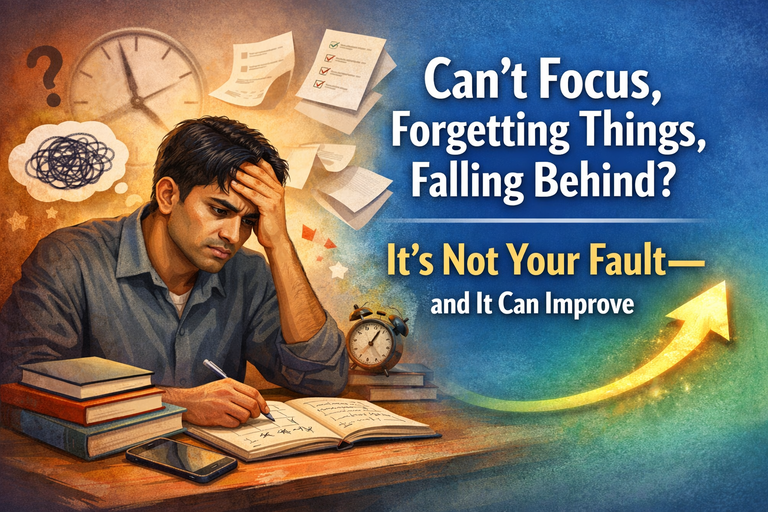
In the digital age, attention is constantly under attack. Frequent notifications, multitasking, endless scrolling, and pressure to “always be on” can all impair concentration, increase stress, and reduce productivity. For some, these struggles also reflect underlying issues like ADHD, anxiety, depression, burnout, or sleep deprivation. The good news: once you understand what’s going on, there is a lot you can do to improve.
Modern life is not designed for deep focus. Constant media multitasking, heavy screen time, and rapid task-switching place a continuous load on your brain’s attention system. Studies suggest that:
The average adult internet user’s attention span can be as short as a few seconds when exposed to highly distracting digital environments.
Frequent device use and multitasking are linked to increased stress, mental fatigue, and reduced sustained attention.
Screens and notifications create “attention load,” forcing your brain to work harder just to filter distractions.
This doesn’t mean technology is “evil,” but it does mean your focus challenges are not just about effort—they’re also about environment.
Focus, memory, and organisation depend on brain circuits involving the prefrontal cortex and key neurotransmitters like dopamine and norepinephrine. When these systems are under strain or dysregulated, you may:
Struggle to stay on task, especially with boring or complex work
Lose track of time and details
Misplace items, forget errands, or miss deadlines
In conditions like ADHD, these patterns are chronic and often start in childhood, though many people are only recognised in adulthood. Symptoms commonly include trouble focusing, forgetfulness, poor time management, and difficulty completing tasks—not lack of intelligence.
Persistent cognitive struggles can have many overlapping causes. Some of the most frequent include:
Chronic stress and burnout: Ongoing stress hormones can impair attention, memory, and emotional regulation, leaving you mentally exhausted and more distractible.
Sleep problems: Lack of deep, restorative sleep reduces vigilance, learning, and working memory, making you more prone to mistakes and forgetfulness.
ADHD in adults: Many adults with ADHD report lifelong patterns of distractibility, disorganisation, and forgetfulness, often mislabelled as careless or lazy.
Anxiety and depression: Worry, rumination, and low mood all consume cognitive resources, leaving less capacity for focus and recall.
Digital overload: Constant screen exposure and multitasking weaken sustained attention and deepen the habit of “quick switching” rather than deep work.
Lifestyle and medical factors: Poor nutrition, inactivity, thyroid issues, B12 or iron deficiency, and unmanaged medical conditions can all contribute to brain fog.
Identifying which of these factors apply to you is a crucial step toward meaningful change.
Many people wonder whether their difficulties are “normal” or something like adult ADHD. While only a professional can diagnose, some red flags include:
Lifelong history of being easily distracted or “daydreamy”
Regularly losing things, missing appointments, or overlooking details
Starting many projects but struggling to finish them
Poor time management and frequent last-minute rushing
Feeling mentally “all over the place” even when you care deeply and are trying your best
Adults with ADHD often describe both lack of focus on routine tasks and episodes of intense hyperfocus on things they find interesting, losing track of time and other responsibilities. If this resonates, an assessment with a psychiatrist can be life-changing.
The brain is not fixed. Throughout life, it can form new neural connections and strengthen existing ones—a property known as neuroplasticity. When you repeatedly practice certain mental and behavioural patterns, you reinforce the circuits that support them.
Evidence suggests that:
Learning new skills, such as a language or musical instrument, improves attention and cognitive flexibility.
Mindfulness and focused-attention practices can enhance your ability to sustain focus and filter distractions over time.
Consistent physical exercise supports brain health and boosts concentration and mental resilience.
This means your current level of focus is not a permanent verdict—it’s a snapshot that can improve with the right inputs.
You don’t need a perfect routine to see benefits; small, consistent changes can significantly improve how your brain feels and functions.
Keep your phone out of sight during deep work blocks; even its presence can increase cognitive load.
Turn off non-essential notifications from social media and messaging apps.
Batch-check email or WhatsApp 2–3 times a day instead of constantly monitoring.
Techniques like the Pomodoro method—for example, 25 minutes of focused work followed by a 5-minute break—can train your brain to engage deeply in short bursts. Over time, your capacity for sustained attention gradually expands.
If your working memory is overloaded, rely less on “trying to remember” and more on systems:
Use a digital or paper planner for tasks, deadlines, and appointments.
Keep consistent places for keys, wallet, and documents.
Do a daily 5-minute “brain dump” to clear mental clutter into a list.
Adults with ADHD or high stress levels often find that external structure significantly reduces mistakes and mental fatigue.
Include protein, healthy fats, fruits, and vegetables to support neurotransmitter production and energy stability.
Aim for regular movement—walks, stretching, or workouts—which enhance blood flow and cognitive function.
Protect sleep with consistent timing and a wind-down routine; avoid screens close to bedtime to improve sleep quality.
Simple, repeatable practices help reinforce focus circuits:
Single-tasking: Choose one task and stay with it, gently redirecting your mind when it wanders.
Mindfulness: Spend 5–10 minutes focusing on your breath or body sensations, noticing distractions without judgment and returning your attention each time.
Brain challenges: Puzzles, memory games, or learning new skills can strengthen neural pathways involved in attention and memory.
Many people with focus and memory difficulties carry a heavy load of shame. They see unfinished projects, missed deadlines, or messy rooms and conclude, “I’m just not good enough.” But clinical and neuroscientific evidence consistently shows that these patterns are linked to brain function and environment—not moral failure.
Self-criticism increases stress, which further impairs attention, while self-compassion reduces stress and supports better regulation. Reframing your inner dialogue can itself be an intervention:
From “I’m useless” to “My brain is overwhelmed; I’m learning how to support it.”
From “I always mess things up” to “I struggle with organisation, and I’m building systems that help.”
From “Everyone else can do this easily” to “Brains differ; mine needs different tools, and that’s okay.”
This shift makes it easier to seek help, try new strategies, and stick with them long enough to see change.
You don’t have to figure this out alone. Consider consulting a mental health professional if:
Focus and forgetfulness are significantly affecting your work, studies, or relationships
You suspect ADHD, anxiety, or depression
You’ve tried lifestyle changes but still feel stuck and overwhelmed
A psychiatrist can assess for adult ADHD, mood or anxiety disorders, sleep issues, and medical contributors, then create a personalised plan that may include therapy, lifestyle interventions, coaching, and where appropriate, medication. Many adults feel profound relief simply from having their experience validated and understood.
Struggling to focus or remember things doesn’t mean you’re broken; it means your brain is signalling that it needs support, structure, and sometimes treatment. Research on attention, ADHD, and neuroplasticity shows that with the right strategies, many people experience significant improvements in clarity, productivity, and emotional well-being over time.
You deserve strategies that work with your brain, not against it. With small, consistent steps—and when needed, professional guidance—you can move from constant firefighting to a calmer, more focused way of living.
From The Lifestyle Clinic
If you see yourself in this article and want structured, evidence-based help with focus, forgetfulness, or suspected ADHD, our team at The Lifestyle Clinic offers psychiatric assessment, ADHD management, and lifestyle-based treatment plans. Reach out to explore what’s going on in your mind—and how life can feel lighter and clearer again.