
Insights from Child Psychology Every Parent Should Know
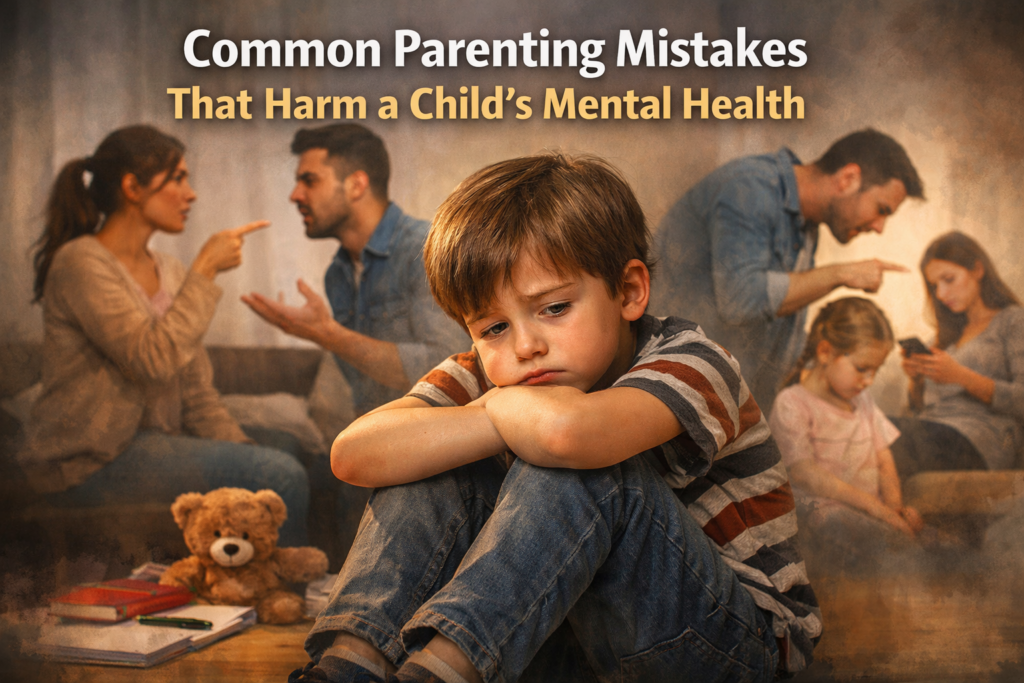
Parenting is one of the most meaningful—and challenging—roles in life. Most parents deeply love their children and want the best for them. Yet, even with good intentions, certain parenting patterns can unknowingly harm a child’s mental and emotional health.
Child psychology shows that a child’s early experiences at home strongly influence their self-esteem, emotional regulation, stress response, relationships, and long-term mental health. Small, repeated behaviors often have a greater impact than occasional major events.
This article explores common parenting mistakes that negatively affect a child’s mental health, why they happen, and what healthier alternatives look like.
A child’s brain is constantly developing—especially in the first 12 years of life. During this period, children learn:
How safe the world feels
Whether emotions are acceptable
How to handle failure and stress
How to view themselves
When parenting is emotionally supportive and consistent, children develop resilience and confidence. When it is invalidating, inconsistent, or fear-based, children may develop anxiety, low self-worth, anger, or emotional withdrawal.
Phrases like:
“Stop crying, it’s nothing.”
“You’re overreacting.”
“There’s no reason to feel scared.”
These statements may seem harmless, but they teach children that their emotions are wrong or unimportant.
Poor emotional regulation
Difficulty expressing feelings
Increased anxiety or suppressed anger
Low emotional intelligence
Children who grow up with emotional invalidation often struggle to identify or manage emotions as adults.
Instead of dismissing emotions:
Acknowledge the feeling: “I can see you’re upset.”
Validate it: “That makes sense.”
Then guide behavior gently.
Validation does not mean agreeing with misbehavior—it means accepting emotions as real.
Linking a child’s worth to:
Marks
Ranks
Achievements
Comparison with others
This is especially common in high-pressure academic environments, including many Indian households.
Chronic stress and anxiety
Fear of failure
Burnout at a young age
Perfectionism or low self-esteem
Children may begin to believe: “I am loved only when I succeed.”
Praise effort, not just results
Encourage curiosity and learning
Normalize mistakes as part of growth
Mental health thrives when children feel valued beyond achievements.
Making every decision for the child
Preventing age-appropriate independence
Constantly “fixing” problems for them
While protection comes from love, overprotection sends a message that the child is incapable.
Low confidence
Poor decision-making skills
Anxiety when facing challenges
Dependence on others
Children raised without autonomy may struggle in adolescence and adulthood.
Offer guidance, not control
Let children make small choices
Allow safe failures
Confidence grows when children experience competence and independence.
Yelling
Threats
Physical punishment
Shaming language
Fear may stop behavior temporarily, but it does not teach emotional understanding or self-control.
Increased aggression or withdrawal
Fear-based compliance
Poor parent-child attachment
Higher risk of anxiety and depression
Children learn to behave when watched, not because they understand right from wrong.
Use calm, consistent consequences
Explain reasons behind rules
Focus on teaching, not punishing
Discipline should guide behavior—not damage emotional safety.
“Why can’t you be like your sibling?”
“Other children are better behaved.”
Constant comparisons with cousins or classmates
Low self-worth
Sibling rivalry
Resentment and jealousy
Identity confusion
Comparison makes children feel never good enough, even when they try.
Appreciate individual strengths
Compare progress only with the child’s past self
Encourage personal growth
Every child develops at their own pace.
Rules changing based on mood
Sometimes ignoring behavior, sometimes punishing it
One parent allowing what the other forbids
Confusion and insecurity
Increased testing of limits
Anxiety due to unpredictability
Children need structure to feel safe.
Set clear, age-appropriate rules
Be consistent across caregivers
Explain boundaries calmly
Consistency creates emotional stability.
“It’s just a phase.”
“Children don’t get depression.”
“He’ll grow out of it.”
Many parents unintentionally delay help because they fear labels or stigma.
Worsening symptoms
Emotional isolation
Reduced trust in adults
Long-term mental health difficulties
Early emotional struggles deserve attention, not dismissal.
Observe behavior changes
Take emotional distress seriously
Consult a child psychologist when needed
Early intervention can prevent lifelong struggles.
Withdrawing affection when angry
Giving attention only for “good behavior”
Silent treatment
Fear of abandonment
Insecure attachment
People-pleasing tendencies
Emotional dependency
Children need unconditional emotional security.
Separate behavior from worth
Correct actions without withdrawing love
Reassure connection even during conflict
Secure attachment is the foundation of mental health.
Parents often forget that children learn more from what they see than what they are told.
Examples:
Frequent anger outbursts
Poor stress management
Avoiding emotions
Children imitate unhealthy coping
Difficulty managing emotions
Normalization of emotional suppression or aggression
Model calm problem-solving
Talk about emotions openly
Show healthy coping strategies
Parents are a child’s first emotional role models.
Constant phone use
Being physically present but emotionally unavailable
Not listening attentively
Feelings of neglect
Low self-worth
Attention-seeking behaviors
Children don’t need constant entertainment—they need connection.
Spend focused, screen-free time
Listen without judgment
Show interest in the child’s inner world
Even 15 minutes of quality connection daily can make a big difference.
Consider consulting a child psychologist if your child shows:
Persistent sadness or anxiety
Behavioral changes
Withdrawal or aggression
Academic decline
Sleep or appetite issues
Seeking help is not a failure of parenting—it is responsible caregiving.
No parent is perfect. Parenting mistakes are part of learning and growth. What matters most is awareness, reflection, and willingness to change.
By shifting from control to connection, from fear to understanding, and from pressure to support, parents can protect and nurture their child’s mental health—laying the foundation for emotionally healthy adults.
If you’re unsure about your child’s emotional well-being, reaching out to a child psychologist can offer clarity, guidance, and reassurance.