
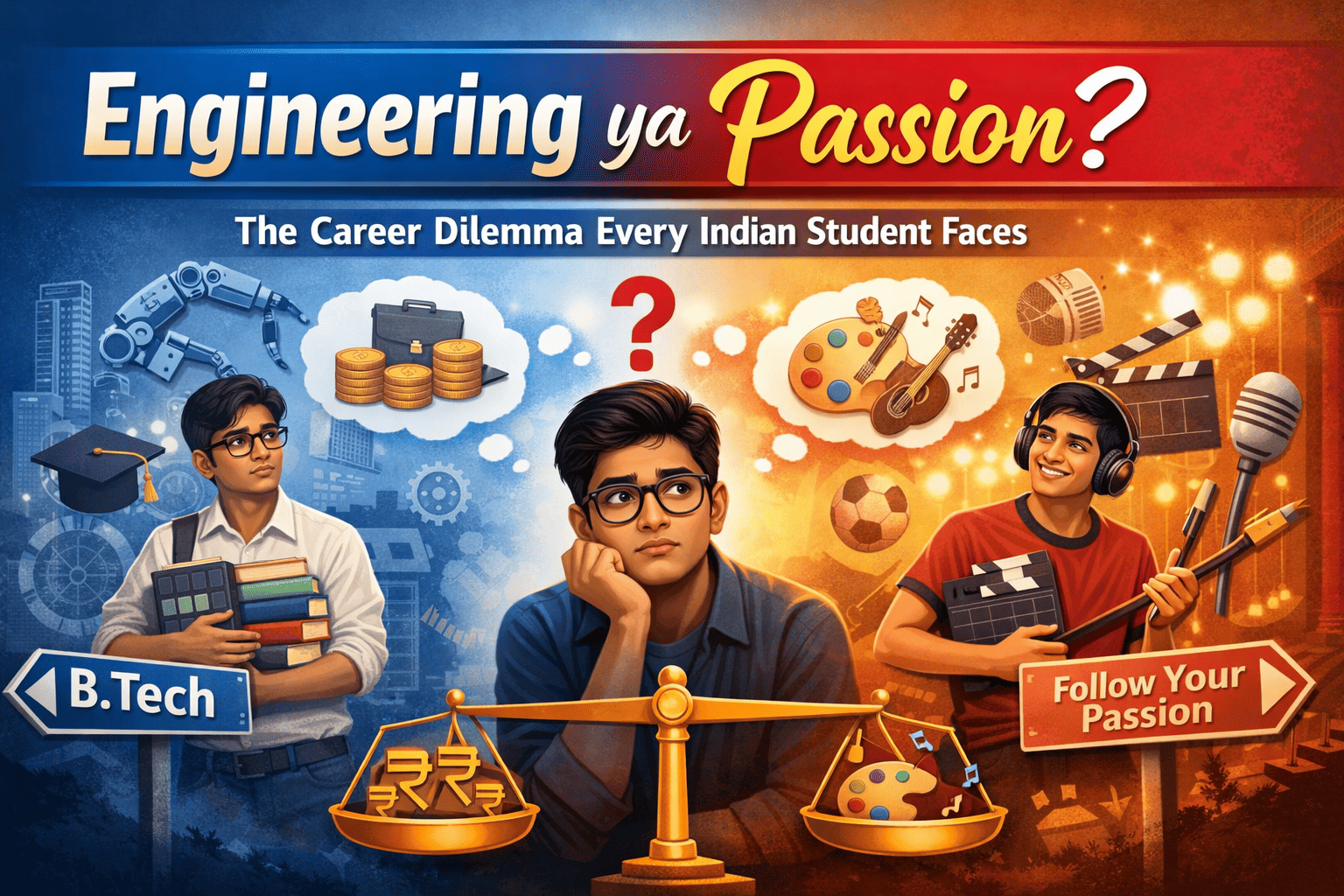
“Beta, engineering kar lo… scope bahut hai.”
If you’re an Indian student, chances are you’ve heard this sentence more times than you can count. For decades, engineering has been seen as a “safe” and “respectable” career path. But what happens when your interests lie elsewhere—maybe in psychology, design, music, sports, or entrepreneurship?
This is where the real dilemma begins: Engineering vs Passion.
Behind this simple choice lies confusion, anxiety, parental expectations, and fear of failure. In this blog, we’ll explore why this dilemma exists, how it affects students mentally, and how career counselling can help you make the right decision.
In many Indian families, engineering is not just a career—it’s a symbol of success and stability. Society often associates engineers with intelligence, discipline, and financial security.
There’s a long-standing belief that engineering guarantees a stable job. While this was somewhat true in the past, today’s job market is far more dynamic and competitive.
“When Sharma ji ka beta can do it, why can’t you?”
Students often feel pressured to follow what their peers are doing, even if it doesn’t align with their interests.
Many students and parents are unaware of the wide range of career options available today—especially in fields like digital marketing, psychology, data science, content creation, and more.
Choosing engineering without genuine interest can have serious psychological consequences:
Studying something you don’t enjoy can lead to constant stress, low motivation, and academic struggles.
Students often lose touch with their passions and start questioning their abilities and self-worth.
The pressure to perform in a field you don’t connect with can lead to mental health issues.
Many professionals switch careers in their late 20s or 30s after realizing they never truly enjoyed engineering.
One of the biggest myths is that you must choose between passion and stability. The truth is:
👉 You can build a career that aligns with both your interests and financial goals.
For example:
The key is clarity, not compromise.
Ask yourself honestly:
If you answered “yes” to most of these, it’s time to pause and reflect.
Career counselling is not just about telling you what career to choose—it’s about helping you understand yourself.
Psychologists use standardized tools to assess:
This removes guesswork and gives you clarity based on data.
A trained psychologist helps you:
In India, parents play a crucial role. Career counsellors often guide parents to:
Talking to a professional helps students feel heard, validated, and more confident in their choices.
Rahul, a Class 12 student, chose engineering because of family pressure. He cleared entrance exams and joined a reputed college. But within a year, he felt lost and disconnected.
After seeking career counselling, he realized his true interest was in psychology. With proper guidance and support, he switched paths. Today, he is pursuing a career in counselling psychology and feels more fulfilled than ever.
👉 The lesson: It’s never too early—or too late—to make the right choice.
Parents often want the best for their children—but sometimes, “safe” choices can backfire.
Not every student is meant to be an engineer or doctor.
Today, careers in creative and non-traditional fields can be equally rewarding.
A happy and satisfied child is more likely to succeed than a stressed one.
Understand your interests, strengths, and values.
Don’t limit yourself to traditional fields.
Get professional insights instead of relying on assumptions.
A psychologist can help you connect the dots.
Share your thoughts respectfully and involve them in the process.
The career landscape in India is changing rapidly:
This means students today have more choices than ever before.
The question is not just “Engineering ya Passion?”
The real question is:
👉 “What kind of life do you want to build?”
Choosing a career is one of the most important decisions of your life. It should not be based on fear, pressure, or societal expectations—but on self-awareness and informed guidance.
If you’re feeling confused, remember—you don’t have to figure it out alone.
Career counselling can help you find clarity, confidence, and the courage to choose the path that truly belongs to you.