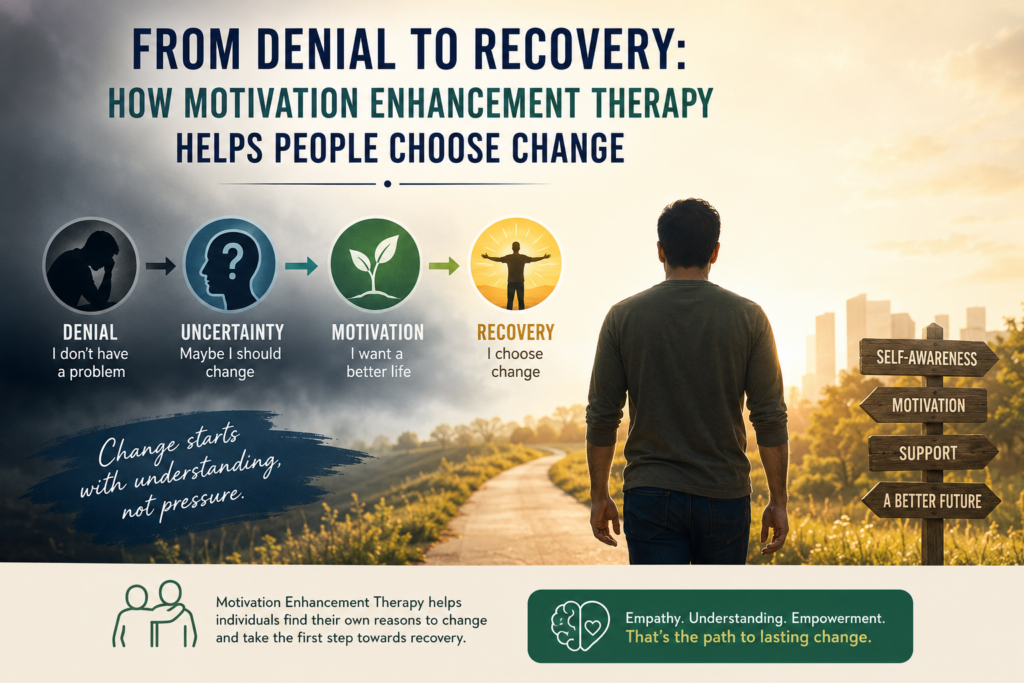
Introduction: “I Can Quit Anytime”—A Statement Mental Health Professionals Hear Every Day
- Why denial is common in addiction.
- Explain that denial is not stubbornness but a psychological defense mechanism.
- Introduce Motivation Enhancement Therapy (MET) as a compassionate, evidence-based approach that helps people find their own reasons to change.
What Is Denial in Addiction?
Denial Is More Than Just Saying “I Don’t Have a Problem”
- Different forms of denial.
- Why people genuinely believe they are in control.
- The emotional and psychological reasons behind denial.
Why Do People Resist Change Even When They Know Addiction Is Hurting Them?
Understanding the Psychology Behind Resistance
- Fear of withdrawal.
- Fear of failure.
- Shame and guilt.
- Social acceptance of alcohol and tobacco in India.
- Loss of identity.
The Stages of Change: Why Recovery Doesn’t Begin Overnight
Understanding How People Move Towards Recovery
- Precontemplation
- Contemplation
- Preparation
- Action
- Maintenance
Explain that every individual moves through these stages differently.
What Is Motivation Enhancement Therapy (MET)?
Helping People Discover Their Own Reasons to Change
- Definition.
- Principles of MET.
- Difference between forcing change and encouraging change.
- Evidence supporting MET.
How Motivation Enhancement Therapy Works
The Four Core Principles of MET
- Expressing empathy.
- Developing discrepancy.
- Rolling with resistance.
- Supporting self-efficacy.
Include practical examples that Indian families can relate to.
Signs Someone May Benefit from Motivation Enhancement Therapy
- Frequently promises to quit but never starts.
- Says “I’m not addicted.”
- Stops treatment midway.
- Relapses repeatedly.
- Avoids conversations about addiction.
- Attends treatment only because family insists.
A Real-Life Scenario: Ravi’s Journey from Denial to Recovery
Narrate a relatable fictional case:
- Working professional.
- Weekend drinking becoming daily drinking.
- Family conflicts.
- Initial resistance.
- MET sessions.
- Realization.
- Voluntary decision to seek treatment.
Why Motivation Enhancement Therapy Is Different from Traditional Counselling
| Traditional Advice | Motivation Enhancement Therapy |
|---|
| Gives advice | Encourages self-discovery |
| Confronts denial | Explores ambivalence |
| Tries to convince | Helps patients convince themselves |
| Focuses on compliance | Builds intrinsic motivation |
Can Families Help Without Forcing Change?
Supporting Without Controlling
- Avoid blame.
- Listen actively.
- Encourage treatment.
- Celebrate small wins.
- Seek family counselling when needed.
Who Can Benefit from Motivation Enhancement Therapy?
- Alcohol addiction.
- Tobacco addiction.
- Drug dependence.
- Behavioural addictions.
- Young adults.
- Professionals.
- Individuals recovering after relapse.
Common Myths About Motivation and Addiction
Myth vs Fact
- “They’ll quit when they’re ready.”
- “Strong willpower is enough.”
- “Threatening them will work.”
- “If they loved their family, they would stop.”
When Should You Seek Professional Help?
Signs that indicate it is time to consult a psychiatrist or clinical psychologist:
- Increasing dependence.
- Failed attempts to quit.
- Withdrawal symptoms.
- Family distress.
- Impact on work or relationships.
Recovery Begins with One Honest Conversation
Summarize the importance of recognizing denial without judgment.
Emphasize that recovery starts when individuals feel understood—not pressured.
Frequently Asked Questions (FAQs)
Is Motivation Enhancement Therapy only for addiction?
How many MET sessions are usually required?
Can Motivation Enhancement Therapy be combined with medication?
Is Motivation Enhancement Therapy suitable for teenagers?
Does MET work if someone doesn’t want treatment?
Conclusion: Change Cannot Be Forced—But It Can Be Inspired
Reinforce that lasting recovery begins with internal motivation rather than external pressure. Encourage readers and families to seek professional help early and highlight that every small step toward change is meaningful.