
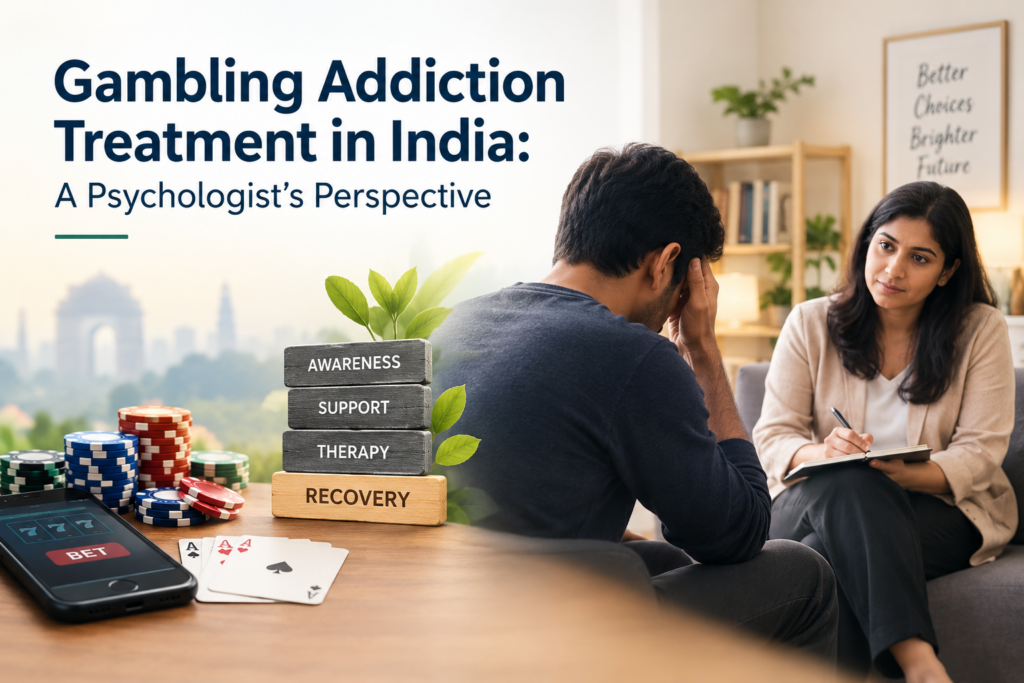
Gambling addiction — clinically known as Gambling Disorder — is one of the most under-discussed mental health conditions in India today. With the explosion of online betting apps, fantasy sports platforms, and rummy or poker websites offering “real cash” rewards, more Indians than ever are quietly battling compulsive gambling behavior. Yet because gambling doesn’t involve a substance, most people don’t recognize it as an addiction requiring professional intervention — until finances, relationships, and mental health have already suffered serious damage.
As a psychologist working with individuals and families across India, I want to break down what gambling addiction actually looks like, why it’s rising so sharply in Indian cities and small towns alike, and — most importantly — what effective, evidence-based treatment looks like.
A decade ago, gambling addiction in India was largely associated with traditional forms — cards during festivals, matka, horse racing, or casino visits during trips to Goa or Sikkim. Today, the landscape has changed dramatically.
Key drivers behind the rise:
This is why gambling addiction treatment in India needs a culturally informed approach — one that accounts for family dynamics, financial shame, and social stigma unique to the Indian context.
Gambling disorder is recognized in the DSM-5 as a behavioral addiction, meaning it activates the brain’s reward system much like substance addiction does. Common signs I look for in clinical assessments include:
If a person shows four or more of these signs within a 12-month period, it typically meets the clinical threshold for gambling disorder.
Gambling addiction rarely exists in isolation. In my clinical experience, it’s often intertwined with:
1. Dopamine-driven reward-seeking Every win — even a small one — triggers a dopamine surge. Over time, the brain starts seeking this high more frequently, similar to substance dependence.
2. Cognitive distortions Most compulsive gamblers develop specific thinking errors, such as:
3. Underlying emotional issues Anxiety, depression, unresolved trauma, or chronic loneliness often coexist with gambling addiction. For many, gambling becomes a coping mechanism rather than a standalone problem.
4. Family and cultural pressure In Indian households, financial responsibility and social image carry heavy weight. This can push individuals to hide their gambling, worsening secrecy, debt, and psychological distress.
Diagnosis isn’t just a checklist — it’s a comprehensive clinical process that typically involves:
Gambling addiction is treatable — but recovery requires structured, professional intervention rather than willpower alone. Here’s what effective treatment typically includes:
CBT is considered the gold standard for gambling addiction treatment. It helps individuals:
Many individuals enter therapy ambivalent about quitting — often pressured by family rather than personally ready to change. MI helps build internal motivation without confrontation, which is particularly effective in the early stages of treatment.
Given the deeply interconnected nature of Indian families, involving spouses, parents, or siblings in therapy is often essential. Family therapy addresses:
Peer-support models, similar to those used in substance addiction recovery, can be highly effective. Sharing experiences with others facing similar struggles reduces shame and reinforces accountability.
While not a substitute for psychological treatment, pairing therapy with basic financial counselling — debt management strategies, structured repayment plans — often improves long-term outcomes, since financial stress is both a trigger and a consequence of gambling addiction.
Given how much gambling now happens through apps, practical harm-reduction tools are increasingly part of treatment plans:
Yes — and for many Indians, it’s often the more accessible option. Online counselling removes geographical barriers (especially valuable for those in Tier 2 and Tier 3 cities where specialized addiction psychologists are scarce), while also offering the privacy many patients need given the stigma around gambling debts. Structured video-based CBT sessions have shown comparable effectiveness to in-person therapy for gambling disorder in multiple international studies.
Recovery from gambling addiction isn’t a one-time fix — it requires ongoing management. Key relapse-prevention strategies include:
Many individuals and families wait far too long before consulting a psychologist, often waiting until debts spiral or relationships break down. Consider seeking help if:
Early intervention leads to significantly better recovery outcomes — both psychologically and financially.
Gambling addiction is a genuine, treatable psychological condition — not a matter of poor willpower or moral failing. With the rapid rise of online betting and fantasy sports platforms in India, more individuals and families are quietly grappling with its consequences than ever before.
If you or someone you know is struggling with compulsive gambling, professional psychological support — combining CBT, family involvement, and structured relapse-prevention strategies — offers a real and proven path to recovery. The first step is simply recognizing that this is a legitimate mental health concern worth addressing, not a secret to carry alone.
If you’re looking for professional support with gambling addiction or any other behavioral addiction, consider reaching out to a licensed psychologist for a confidential consultation.