
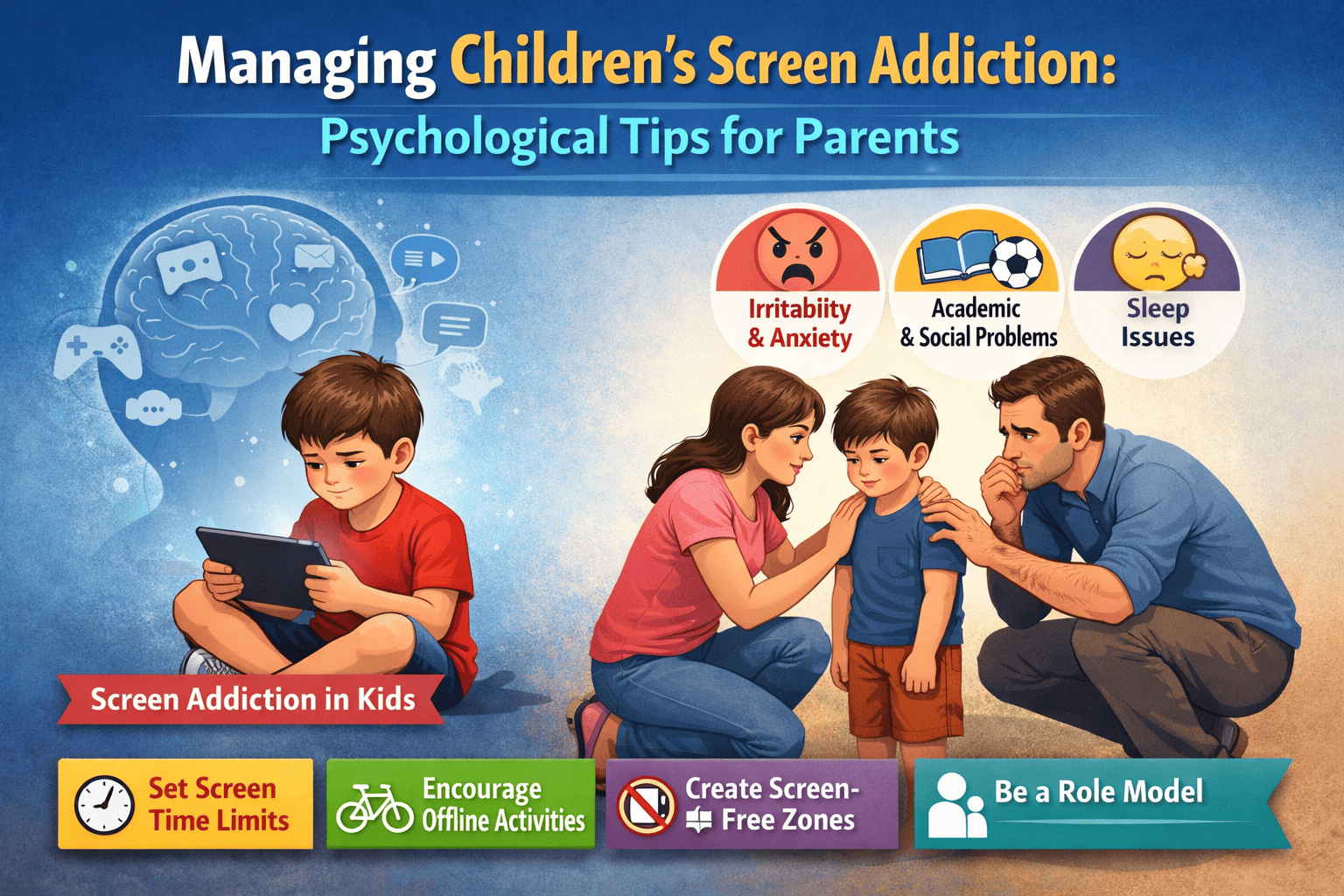
In today’s digital world, screens have become an unavoidable part of children’s daily lives. Smartphones, tablets, computers, televisions, and gaming consoles are widely used for learning, entertainment, and communication. While technology offers many benefits, excessive screen time can lead to screen addiction in children, affecting their mental health, behavior, sleep, and academic performance.
Many parents struggle to find the right balance between allowing technology and preventing overuse. Understanding the psychological impact of screen addiction and learning effective strategies can help parents guide their children toward healthier digital habits.
This article explores the causes of screen addiction in children and practical psychological tips for parents to manage and reduce excessive screen use.
Screen addiction refers to excessive or compulsive use of digital devices such as smartphones, tablets, video games, or computers. Children who are addicted to screens often find it difficult to stop using devices even when it interferes with daily activities such as studying, sleeping, or socializing.
Unlike healthy screen use for learning or limited entertainment, screen addiction involves a loss of control over device usage.
Common digital activities that may lead to screen addiction include:
Video games
Social media
Watching videos or cartoons
Online browsing
Mobile apps and online entertainment
When children spend too much time on screens, it can begin to replace real-life experiences and interactions.
Recognizing the early signs of screen addiction can help parents take action before the problem worsens. Some common signs include:
Children spend many hours each day on digital devices and become upset when asked to stop.
Children may show anger, frustration, or anxiety when their devices are taken away.
Screen-addicted children may lose interest in hobbies such as playing outdoors, reading, or interacting with family members.
Using screens late at night can interfere with sleep cycles, making children tired and less focused during the day.
Too much screen time may reduce concentration and study time, leading to poor academic performance.
If parents notice several of these signs, it may indicate the child is developing unhealthy screen habits.
Excessive screen use can have a variety of psychological and emotional effects on children.
Constant stimulation from games and videos can make it harder for children to concentrate on tasks that require sustained attention, such as studying or reading.
Children who rely heavily on screens may experience emotional instability, irritability, or anxiety.
Children learn important social skills through real-life interactions. Too much screen time can reduce opportunities to practice communication and empathy.
Some children begin using screens as a coping mechanism for boredom, stress, or loneliness.
Passive digital entertainment may limit imagination and creative thinking.
Understanding these psychological effects helps parents recognize why managing screen time is so important.
Several psychological and environmental factors contribute to screen addiction in children.
Games, videos, and apps are designed to provide instant gratification, which can make them highly addictive.
When children do not have engaging offline activities, they often turn to digital entertainment.
Children often imitate their parents. If parents frequently use devices, children may develop similar habits.
Screens sometimes become an easy escape from boredom, academic pressure, or emotional difficulties.
Friends and classmates may influence children to spend more time on social media or gaming platforms.
Understanding these causes can help parents address the root of the problem.
Parents can play a powerful role in shaping healthy digital habits. The following strategies are based on psychological principles that help children develop self-control and balance.
Establish clear rules about how much screen time is allowed each day.
Experts often recommend:
Preschool children: minimal screen exposure
School-age children: around 1–2 hours of recreational screen time daily
Setting predictable limits helps children understand boundaries and reduces conflicts.
Parents should also ensure that screen use does not interfere with sleep, homework, family time, and physical activity.
Designate certain areas of the home where screens are not allowed.
Examples include:
Dining tables
Bedrooms
Study areas
Screen-free zones encourage children to engage in conversation, family bonding, and focused learning.
Children are less likely to rely on screens when they have exciting alternatives.
Encourage activities such as:
Outdoor sports
Reading books
Drawing or painting
Board games
Music or dance
These activities support creativity, physical health, and social interaction.
Children observe and imitate their parents’ behavior. If parents constantly check their phones or watch television, children may assume that such behavior is normal.
Parents can demonstrate healthy digital habits by:
Limiting their own screen use
Engaging in family activities
Avoiding phone use during conversations
When parents lead by example, children are more likely to follow.
Using devices before bedtime can negatively affect sleep quality. The blue light emitted by screens interferes with the body’s natural sleep cycle.
Parents can establish a digital curfew, such as turning off all devices at least one hour before bedtime.
Instead of screens, children can engage in relaxing activities like reading or storytelling.
Instead of completely banning technology, parents should teach children how to use it responsibly.
Important lessons include:
Understanding the difference between productive and excessive screen use
Learning time management skills
Recognizing when digital activities become unhealthy
This approach helps children develop long-term self-regulation.
Sometimes children use screens to cope with loneliness, stress, or boredom.
Parents can reduce this reliance by strengthening emotional bonds through:
Family discussions
Shared activities
Listening to children’s concerns
When children feel emotionally supported, they are less likely to depend on screens for comfort.
Not all screen time is harmful. Educational content can support learning and creativity when used appropriately.
Parents can guide children toward:
Educational videos
Learning apps
Creative digital tools
Choosing quality content ensures that screen time becomes productive rather than addictive.
Positive reinforcement can motivate children to adopt healthier habits.
Parents may reward children when they:
Complete homework before screen use
Participate in physical activities
Follow screen time rules
Rewards do not need to be material; praise and encouragement can be equally effective.
In some cases, children may struggle to control their screen use despite parental efforts.
Parents should consider consulting a child psychologist if:
Screen addiction severely affects academic performance
The child becomes aggressive or anxious without devices
There are signs of social withdrawal or emotional distress
Professional counseling can help children develop healthier coping strategies and improve behavioral patterns.
Technology plays an important role in modern life, but excessive screen use can negatively affect children’s emotional, social, and cognitive development. Screen addiction is a growing concern for many families, but with the right strategies, parents can help children develop healthier digital habits.
By setting clear limits, encouraging offline activities, modeling responsible behavior, and strengthening emotional connections, parents can create a balanced environment where technology supports learning rather than dominating daily life.
Ultimately, the goal is not to eliminate screens entirely but to teach children how to use technology in a mindful and responsible way. With guidance, patience, and consistent support, children can enjoy the benefits of technology while maintaining a healthy lifestyle.