
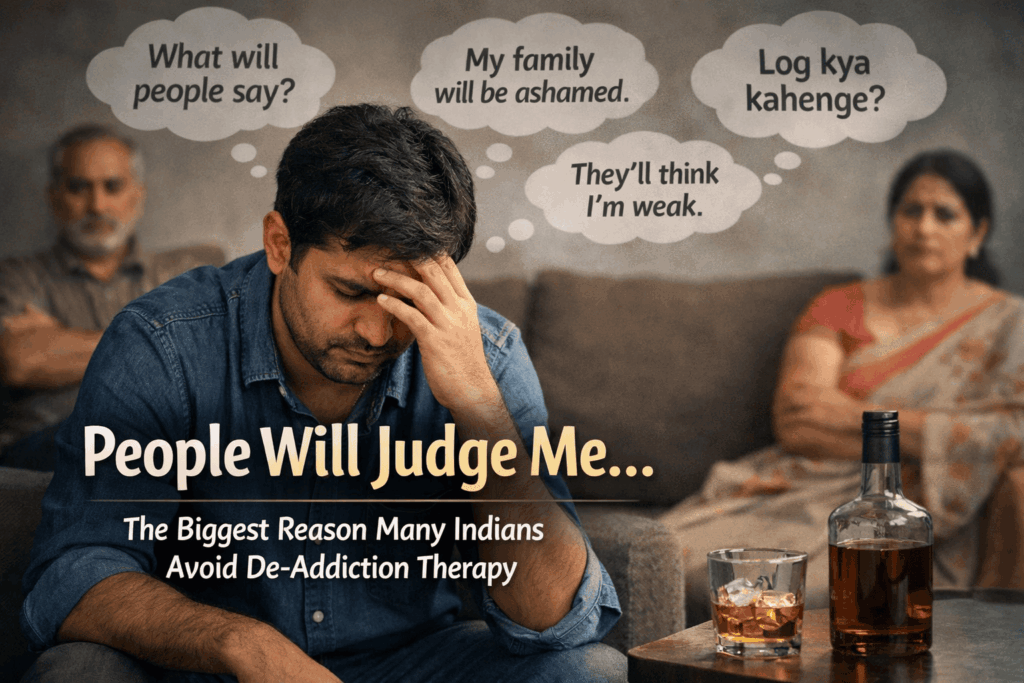
Addiction is a growing concern across India, yet many people struggling with alcohol, substance use, or behavioral addictions hesitate to seek professional help. One of the most common reasons people give is simple but powerful: “What will people think?”
The fear of being judged by family, friends, colleagues, or society prevents many individuals from seeking de-addiction therapy, even when they know they need support. Unfortunately, this hesitation often delays recovery and allows addiction to worsen over time.
Understanding why this fear exists and how therapy can help is an important step toward breaking the stigma around addiction treatment in India.
Addiction does not discriminate. It can affect anyone—students, working professionals, homemakers, entrepreneurs, and even people who appear successful on the outside. In recent years, psychologists and mental health professionals across India have observed a steady rise in different types of addictions, including:
Alcohol addiction
Substance or drug addiction
Smoking or nicotine dependence
Gaming and social media addiction
Prescription medication misuse
Urban stress, work pressure, loneliness, relationship conflicts, and lifestyle changes have contributed to the increasing number of people struggling with dependency.
However, while addiction itself is common, seeking therapy for addiction is still surrounded by stigma.
One of the biggest barriers to seeking help is the fear of being labeled. Many people worry that if others find out they are seeking therapy for addiction, they will be judged as weak, irresponsible, or lacking self-control.
In Indian society, where reputation and social image are highly valued, people often try to hide their struggles rather than openly address them.
Some common thoughts people have include:
“If people find out, they will think badly of me.”
“What if my relatives hear about it?”
“My colleagues might lose respect for me.”
“My family will feel embarrassed.”
These fears often prevent individuals from reaching out for professional support.
Many people still believe that addiction is simply a lack of willpower rather than a psychological or medical condition.
Because of this misconception, individuals struggling with addiction may hear statements like:
“Just stop drinking.”
“Control yourself.”
“You’re strong enough to quit.”
While these comments may be well-intentioned, they ignore the complex psychological and neurological factors involved in addiction.
In reality, addiction affects brain chemistry, emotional regulation, and decision-making processes. This is why professional therapy is often necessary for long-term recovery.
Family plays a central role in Indian culture, which can be both supportive and challenging for someone dealing with addiction.
Many individuals fear that admitting they need therapy will disappoint their parents, spouse, or relatives. Some families may also try to hide the problem instead of addressing it.
In some cases, people hear statements like:
“Don’t tell anyone about this.”
“We will handle it within the family.”
“Therapy is only for serious mental problems.”
Unfortunately, ignoring the problem rarely makes it disappear.
Another reason many people avoid therapy is simply not knowing how it works.
Some common misconceptions include:
Therapy means staying in a rehabilitation center for months.
Psychologists will judge or lecture them.
Therapy is only for severe addiction cases.
Recovery is impossible after relapse.
In reality, de-addiction therapy is a supportive and structured process that helps individuals understand their triggers, develop coping strategies, and gradually regain control over their lives.
Addiction is rarely just about the substance or behavior itself. It is often connected to deeper emotional or psychological struggles.
Many individuals turn to alcohol, drugs, or other addictive behaviors to cope with:
Chronic stress
Anxiety or depression
Relationship conflicts
Loneliness
Work pressure
Trauma or unresolved emotional pain
Initially, the substance or behavior may provide temporary relief. Over time, however, the brain begins to rely on it as a coping mechanism.
This is where de-addiction therapy becomes essential, as it addresses the root causes of addiction rather than just the symptoms.
Professional therapy provides a safe and confidential space where individuals can talk openly about their struggles without fear of judgment.
Here are some ways therapy supports recovery.
A psychologist helps individuals identify situations, emotions, or environments that trigger addictive behavior.
For example, triggers might include:
Work stress
Social pressure
Loneliness at night
Relationship conflicts
Recognizing these triggers is the first step toward changing unhealthy patterns.
Instead of relying on alcohol or substances, therapy helps individuals build healthier ways to manage stress and emotions.
These may include:
Mindfulness and relaxation techniques
Emotional regulation skills
Healthy lifestyle habits
Communication and relationship skills
Over time, these tools help reduce dependence on addictive behaviors.
Addiction often damages self-esteem. People may feel guilty, ashamed, or frustrated with themselves.
Therapy focuses on rebuilding confidence and helping individuals understand that recovery is possible.
With the right guidance, many people regain control over their lives and develop stronger emotional resilience.
Recovery is a process, and setbacks can happen.
A key goal of de-addiction therapy is to help individuals create strategies that reduce the risk of relapse. This may include:
Identifying high-risk situations
Building a strong support system
Learning stress management techniques
Maintaining accountability
These strategies make long-term recovery more achievable.
One of the most important steps toward addressing addiction in India is changing how society views therapy.
Seeking help is not a sign of weakness—it is a sign of self-awareness and courage.
Just as people visit doctors for physical health concerns, consulting a psychologist for addiction is a responsible and proactive decision.
When more people begin to talk openly about mental health and addiction recovery, the stigma surrounding therapy will gradually decrease.
Family members often play a crucial role in recovery. Supportive and understanding families can make a significant difference.
Here are some ways families can help:
Encourage open and non-judgmental conversations
Avoid blaming or shaming the individual
Support the decision to seek therapy
Be patient during the recovery process
Learn more about addiction and mental health
Empathy and understanding can create an environment where individuals feel safe seeking help.
If you or someone you know is struggling with addiction, remember that you are not alone.
Thousands of people in India are silently dealing with similar challenges. The difference between continuing the struggle and beginning recovery often lies in taking the first step.
Speaking to a qualified psychologist or mental health professional can help you:
Understand the reasons behind addiction
Learn healthier coping mechanisms
Rebuild confidence and emotional balance
Work toward long-term recovery
Addiction can feel overwhelming, but it does not define a person’s future.
With the right support, therapy, and commitment, individuals can overcome addiction and build healthier, more fulfilling lives.
The fear of judgment should never stop someone from seeking help. In reality, choosing therapy is not something to hide—it is something to be proud of.
Recovery begins the moment someone decides that their well-being is more important than what others might think.
If you or a loved one is considering de-addiction therapy, reaching out to a qualified psychologist can be the first step toward lasting change and recovery.