
“Every morning has become a struggle. My child cries, complains of a stomach ache, or refuses to get out of bed. We never had this problem before—what changed?”
If this sounds familiar, you are not alone.
Many parents assume that a child who refuses to go to school is being stubborn, lazy, or simply trying to avoid studies. However, in many cases, school refusal is not about disobedience—it is a sign that your child is struggling emotionally.
School refusal is becoming increasingly common among Indian children due to rising academic pressure, social challenges, bullying, anxiety, and emotional stress. Understanding the real reason behind your child’s behaviour is the first step toward helping them.
In this article, we’ll explore why children suddenly stop wanting to attend school, the warning signs parents should watch for, and how a child psychologist can help.
School refusal is a pattern where a child experiences significant emotional distress related to attending school. Unlike truancy, children with school refusal usually want to do well but feel overwhelmed by fear, anxiety, or emotional discomfort.
They may:
Cry every morning before school.
Refuse to get dressed.
Complain of headaches or stomach pain.
Beg parents to let them stay home.
Panic at the school gate.
Frequently ask to be picked up early.
These behaviours are not acts of manipulation. They are often a child’s way of expressing emotional distress.
Yes.
A child who once loved school may suddenly begin refusing to attend after a stressful life event or gradual emotional buildup.
Common triggers include:
Changing schools.
Entering a new class.
Academic pressure.
Bullying.
Conflict with teachers.
Friendship problems.
Family conflicts.
Illness or hospitalization.
Pandemic-related disruptions.
Fear of examinations.
Sometimes parents cannot identify any obvious reason, making the situation even more confusing.
Every child is different. Understanding the underlying cause is more important than forcing attendance.
Anxiety is one of the leading causes of school refusal.
A child may worry about:
Making mistakes.
Speaking in class.
Being laughed at.
Being separated from parents.
Exams and grades.
Meeting expectations.
Instead of saying “I’m anxious,” children often complain of physical symptoms.
Many children hide bullying because they fear:
Nobody will believe them.
The bullying will worsen.
They will be blamed.
Parents will overreact.
Signs include:
Torn belongings.
Missing lunch boxes.
Sudden sadness.
Fear of specific classmates.
Unexplained injuries.
Declining confidence.
Indian students often juggle:
School.
Tuition.
Coaching.
Homework.
Competitive exams.
Extracurricular activities.
Some children become emotionally exhausted.
Instead of saying “I’m overwhelmed,” they simply refuse school.
A child struggling with reading, writing, attention, or understanding lessons may begin avoiding school.
They may fear embarrassment when asked to read aloud or answer questions.
Undiagnosed learning difficulties often lead to anxiety and poor self-esteem.
Some children struggle with:
Making friends.
Group activities.
Classroom participation.
Feeling left out.
These experiences can make school emotionally exhausting.
Children absorb stress happening at home.
Examples include:
Parents arguing frequently.
Divorce or separation.
Financial problems.
Illness in the family.
Death of a loved one.
Arrival of a new sibling.
School may become another source of stress rather than a safe place.
School refusal often begins subtly.
Watch for:
Frequent stomach aches before school.
Headaches that disappear on holidays.
Crying before leaving home.
Panic attacks.
Trouble sleeping before school days.
Constant requests to stay home.
Sudden drop in academic performance.
Loss of appetite.
Irritability.
Clinginess.
Excessive reassurance seeking.
These symptoms are genuine, even when medical tests are normal.
One of the most common complaints parents hear is:
“My stomach hurts.”
Or:
“I think I have a fever.”
Medical tests often show nothing wrong.
This happens because anxiety affects the body.
Children may genuinely experience:
Nausea.
Vomiting.
Headaches.
Fast heartbeat.
Sweating.
Dizziness.
Stomach pain.
The symptoms are real—even when the cause is emotional.
Many parents unintentionally worsen school refusal.
Avoid:
“Stop acting.”
“You’re just making excuses.”
“Everyone goes to school.”
“You’re being lazy.”
These responses may increase anxiety and damage trust.
Children look to parents for emotional safety.
Reacting with anger often increases fear.
Instead of asking:
“Why don’t you want to go?”
Try asking:
“What feels difficult about school?”
“When did this start?”
“Is something happening at school?”
Sometimes children need several conversations before opening up.
Talk to:
Class teachers.
School counsellors.
Coordinators.
Find out if there are:
Bullying concerns.
Friendship issues.
Academic challenges.
Behavioural changes.
Avoid allowing unlimited screen time at home.
Maintain:
Wake-up times.
Meal schedules.
Bedtimes.
Consistency helps children regain confidence.
Celebrate progress such as:
Getting dressed.
Entering the school gate.
Attending one class.
Staying longer each day.
Recovery often happens gradually.
Consult a child psychologist if:
School refusal lasts more than two weeks.
Anxiety becomes severe.
Physical symptoms occur regularly.
Your child experiences panic attacks.
Academic performance declines significantly.
Bullying is suspected.
Your child talks about hopelessness or self-harm.
Family stress appears to be affecting emotional health.
Early intervention prevents long-term emotional and academic difficulties.
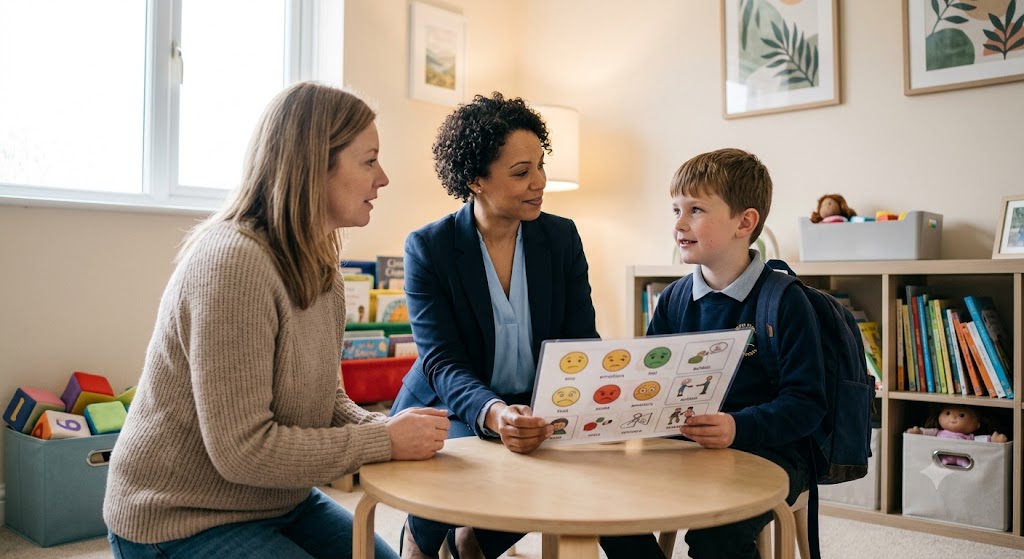
A child psychologist works to understand why your child is refusing school—not just to make them attend.
Support may include:
Emotional assessment.
Anxiety management strategies.
Play therapy (for younger children).
Cognitive Behaviour Therapy (CBT).
Parent guidance sessions.
Social skills training.
Confidence-building exercises.
Collaboration with teachers and schools.
Treatment focuses on helping the child feel safe, understood, and capable of returning to school.
Riya, a 10-year-old student, suddenly began crying every morning before school. She complained of stomach pain, missed several classes, and her parents feared she was becoming “lazy.”
After speaking with a child psychologist, it became clear that Riya had been bullied by a group of classmates. She had kept it a secret because she thought her parents would ask her to “ignore it.”
With counselling, support from her school, and guidance for her parents, Riya gradually regained confidence and returned to school happily.
Many children have similar experiences. The key is recognising that behaviour often communicates what words cannot.
While not every situation can be prevented, parents can reduce the risk by:
Encouraging open conversations about school.
Taking emotional complaints seriously.
Building a healthy daily routine.
Avoiding excessive academic pressure.
Teaching problem-solving and coping skills.
Staying connected with teachers.
Making home a safe space where children feel heard rather than judged.
When children know they can share their fears without being criticised, they are more likely to seek help before anxiety grows.
School refusal is not a sign of laziness, poor parenting, or a “difficult child.” It is often a signal that something in your child’s emotional world needs attention.
Instead of asking, “How do I make my child go to school?”, consider asking, “What is my child trying to tell me through this behaviour?”
By listening with empathy, working closely with the school, and seeking professional guidance when needed, parents can help children regain their confidence and reconnect with learning in a healthy way.
Remember, school attendance is important—but your child’s emotional well-being is the foundation for long-term academic success and a happy, resilient future.