
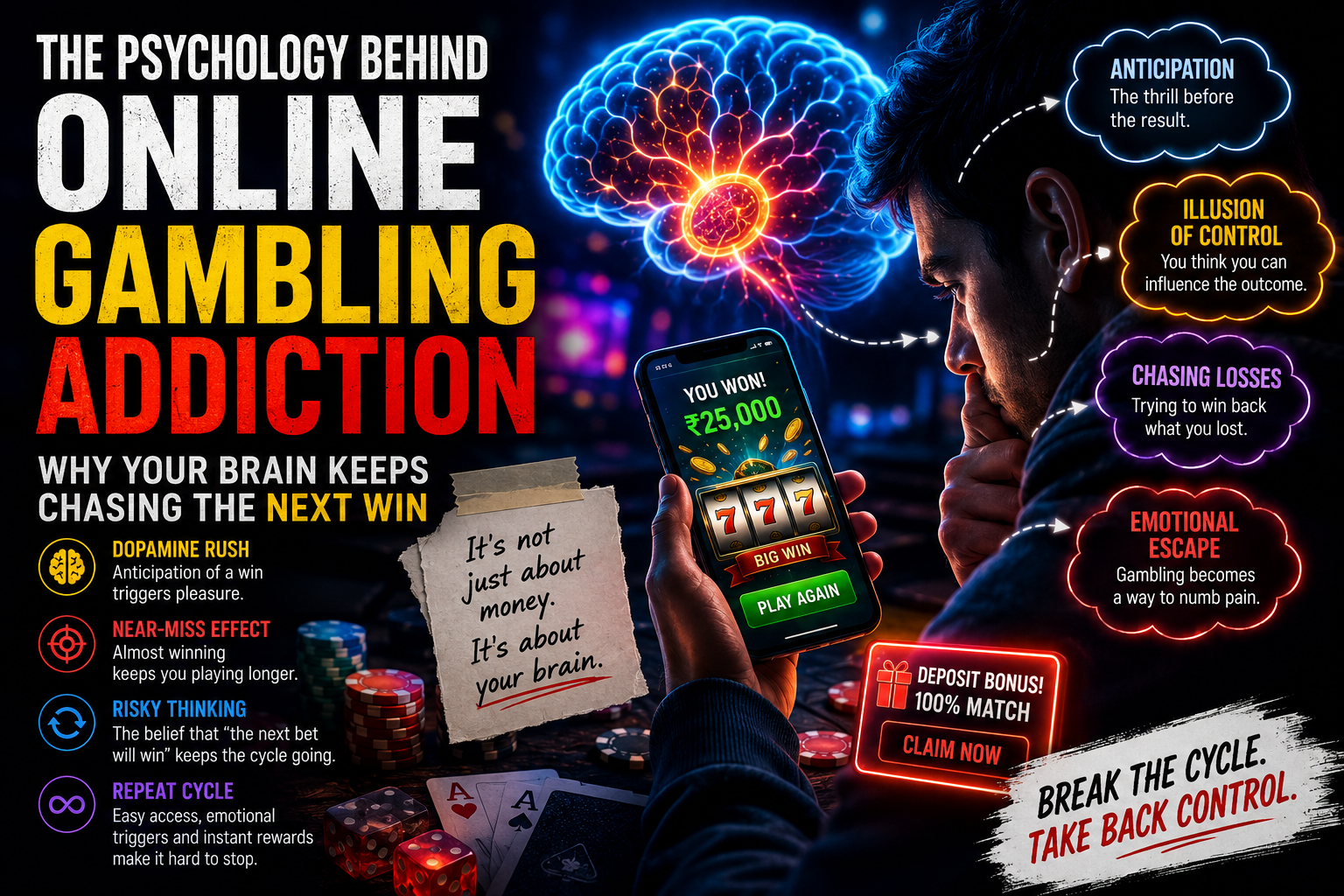
Online gambling has transformed from an occasional leisure activity into a 24/7 digital experience. With just a smartphone and an internet connection, anyone can place bets, spin virtual slot machines, or play poker from the comfort of their home. While many people gamble recreationally, for others it gradually becomes an uncontrollable habit that affects their finances, relationships, work, and mental health.
The question many people ask is: “If I know I’m losing money, why do I keep going back?”
The answer lies not in a lack of willpower but in the fascinating—and sometimes dangerous—way the human brain works. Understanding the psychology behind online gambling addiction can help individuals recognize the warning signs early and seek help before the problem escalates.
Online gambling addiction, also known as Internet Gambling Disorder or problem gambling, is a behavioral addiction characterized by an inability to stop gambling despite experiencing negative consequences.
Unlike substance addictions involving drugs or alcohol, gambling addiction doesn’t involve ingesting a chemical. Instead, the brain becomes addicted to the emotional highs, anticipation, and rewards associated with gambling.
People may become addicted to:
The digital nature of these platforms makes gambling easier, faster, and more accessible than ever before.
The secret lies inside your brain’s reward system.
Every time you experience something pleasurable—such as eating your favorite food, receiving praise, or achieving a goal—your brain releases a neurotransmitter called dopamine.
Dopamine is often referred to as the “feel-good chemical,” but that’s only partially true.
In reality, dopamine is the “anticipation chemical.”
It motivates you to seek rewards and repeat behaviors that might lead to positive outcomes.
Online gambling exploits this natural reward mechanism exceptionally well.
Imagine two situations.
Every time you press a button, you receive ₹100.
Sometimes you receive ₹1,000.
Sometimes ₹500.
Sometimes nothing.
Sometimes ₹10,000.
Surprisingly, Situation 2 is far more addictive.
Psychologists call this a Variable Ratio Reinforcement Schedule, one of the strongest forms of behavioral conditioning ever discovered.
The uncertainty of when the next reward will arrive keeps the brain engaged.
Every spin, every bet, every card dealt creates anticipation.
The brain keeps thinking:
“Maybe this time.”
That anticipation produces dopamine—even before the outcome is known.
One of the most powerful psychological tricks used in gambling is the near miss.
Examples include:
Although you’ve technically lost, your brain interprets the event as being “close to winning.”
Brain imaging studies show that near misses activate reward-related brain areas almost as strongly as actual wins.
Instead of feeling discouraged, many gamblers become even more motivated to continue.
Online gambling platforms frequently provide:
Even small wins create excitement.
Unfortunately, the brain remembers these emotional highs far more vividly than the numerous losses.
This selective memory contributes to continued gambling despite overall financial losses.
Many gamblers genuinely believe they can influence random outcomes.
Examples include:
These beliefs create an illusion of control.
In reality, most online gambling outcomes are governed by chance or complex algorithms.
Believing you have control increases confidence and encourages continued betting.
One hallmark of gambling addiction is chasing losses.
After losing money, people often think:
Unfortunately, this usually leads to:
This creates a vicious cycle that becomes increasingly difficult to break.
Compared to physical casinos, online gambling offers several features that increase addiction risk.
Online gambling never closes.
Apps and websites operate 24 hours a day, making impulsive betting easier.
There is almost no waiting time.
Within seconds, players can:
This rapid pace prevents thoughtful decision-making.
People can gamble alone without anyone noticing.
This secrecy often delays family intervention until significant financial damage has occurred.
Paying digitally reduces the emotional discomfort associated with spending money.
UPI, wallets, debit cards, and online banking create psychological distance from actual cash.
Many gambling apps send notifications such as:
These reminders trigger cravings and encourage repeated engagement.
Many people don’t gamble simply to make money.
Instead, gambling often becomes a way to manage uncomfortable emotions.
Common emotional triggers include:
People may gamble to escape work pressure or financial worries.
Ironically, gambling often creates even greater stress later.
Online gambling provides excitement and distraction during periods of isolation.
Temporary excitement can distract from anxious thoughts.
However, anxiety usually worsens after losses.
Some individuals gamble to feel something positive when emotionally numb.
Unfortunately, repeated losses often deepen depressive symptoms.
Many people gamble simply because they’re bored.
The fast pace of online gambling provides constant stimulation.
Our brains are full of mental shortcuts called cognitive biases.
These biases can lead to irrational gambling decisions.
Believing previous outcomes affect future random events.
Example:
“Red has appeared five times, so black must come next.”
In reality, each spin is independent.
Remembering wins while ignoring losses.
A gambler recalls the ₹20,000 jackpot but forgets the numerous losing sessions.
Recent wins feel more important than long-term losses.
This creates false confidence.
Believing bad outcomes happen to others, not yourself.
This reduces awareness of personal risk.
Warning signs include:
Recognizing these signs early is crucial.
Online gambling addiction is closely linked with various mental health conditions.
These may include:
The emotional burden often extends beyond the individual, affecting family members, partners, and children.
Many people believe they simply need more self-control.
However, repeated gambling changes the brain over time.
The reward system becomes increasingly sensitive to gambling-related cues, while the brain’s self-control centers become less effective during moments of craving.
Environmental triggers such as:
can activate intense urges even after long periods without gambling.
Recovery therefore involves much more than simply deciding to stop.
The good news is that gambling addiction is treatable.
Several approaches have shown strong scientific evidence.
CBT helps individuals:
This therapy helps people resolve internal conflicts about changing their behavior.
Family involvement often improves recovery by rebuilding trust and creating healthy boundaries.
Professional financial guidance can help individuals manage debt and reduce the stress that often fuels further gambling.
Peer support groups provide understanding, accountability, and encouragement from others with similar experiences.
Many gambling platforms allow users to:
These practical tools can support recovery when combined with therapy.
If someone you care about is struggling with gambling:
Compassion, combined with clear boundaries, is often more effective than criticism.
Reducing the risk of gambling addiction starts with awareness and healthy coping strategies.
Some practical steps include:
Early intervention can prevent occasional gambling from developing into a serious addiction.
Online gambling addiction is not simply about money—it is about the intricate ways our brains respond to reward, uncertainty, and emotion. Features like unpredictable wins, near misses, instant access, and personalized rewards are designed to keep people engaged, making it difficult to walk away even after repeated losses.
Recognizing that gambling addiction is a behavioral health condition—not a moral failing—is the first step toward recovery. With timely intervention, evidence-based therapies such as Cognitive Behavioral Therapy (CBT), supportive relationships, and practical tools like self-exclusion programs, individuals can regain control over their lives.
If you or someone you know is finding it difficult to stop gambling despite its negative consequences, remember that seeking professional help is a sign of strength, not weakness. Recovery is possible, and every step toward understanding the psychology behind gambling is a step toward lasting change.