
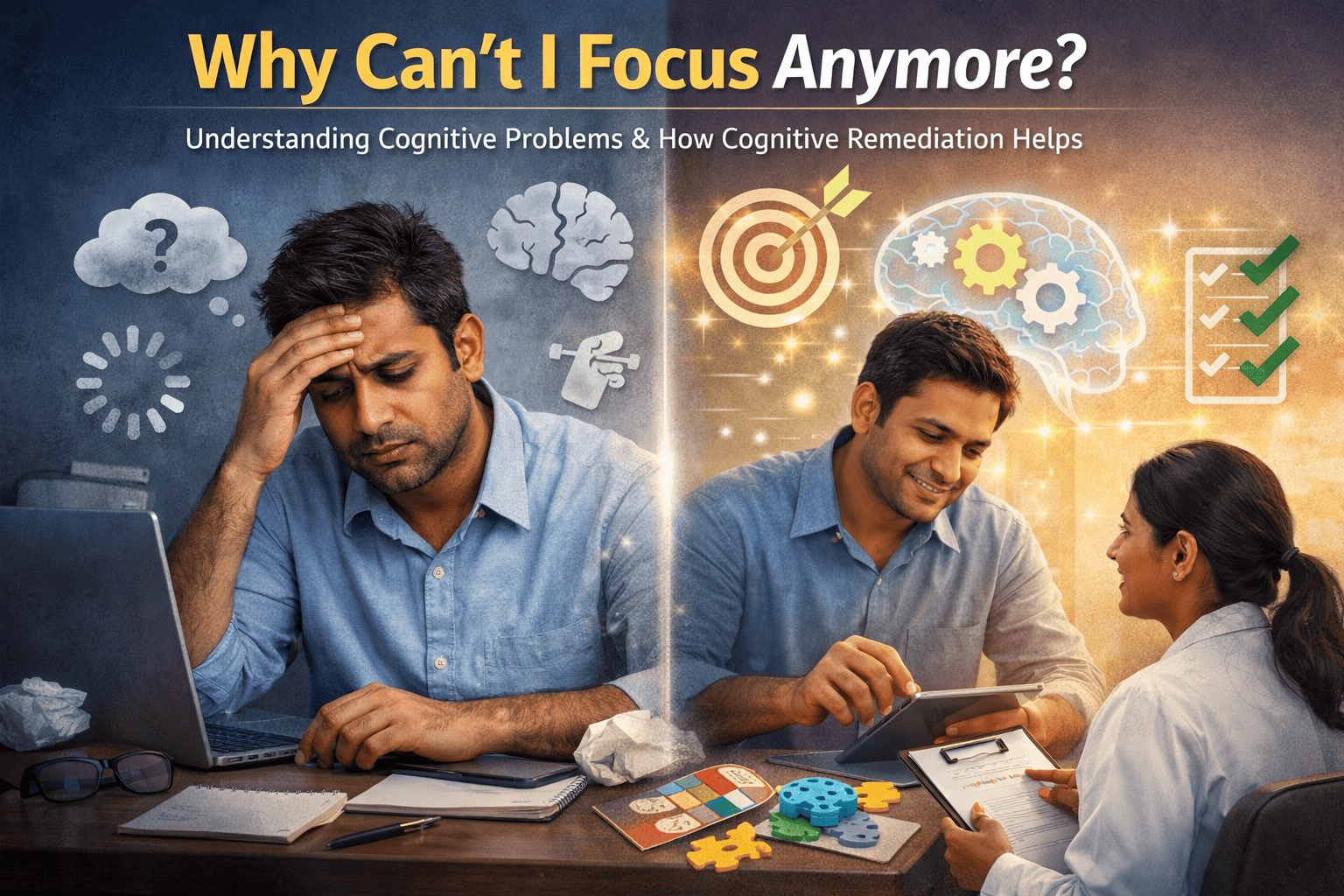
Many people experience moments when they struggle to focus, forget simple things, or feel mentally slow. In today’s fast-paced world, it is common to blame stress, lack of sleep, or a busy schedule. However, when these problems persist, they may indicate underlying cognitive difficulties that need attention.
If you’ve ever asked yourself, “Why can’t I focus anymore?” you’re not alone. Problems with concentration, memory, and mental clarity affect many individuals, especially those dealing with mental health conditions or prolonged stress.
Fortunately, treatments like Cognitive Remediation Therapy are helping patients improve thinking skills and regain confidence in their daily lives.
In this article, we will explore what cognitive problems are, why they occur, and how cognitive remediation can help improve focus, memory, and mental functioning.
Cognitive functions are the mental processes that help us think, learn, remember, and solve problems. These include:
Attention and concentration
Memory
Problem-solving ability
Decision-making
Processing speed
Planning and organization
When these functions are impaired, a person may struggle with tasks that once felt easy.
For example, someone experiencing cognitive difficulties may notice:
Difficulty focusing on work or studies
Forgetting conversations or appointments
Trouble following instructions
Feeling mentally slow or confused
Difficulty making decisions
Struggling to multitask
These challenges can affect daily functioning, relationships, and professional life.
There are several reasons why someone might start experiencing problems with focus and concentration.
Long-term stress affects how the brain processes information. When stress levels remain high for extended periods, attention and memory may decline.
People under stress often report mental fatigue, poor concentration, and reduced productivity.
Cognitive difficulties are common in several mental health conditions, including:
Depression
Schizophrenia
ADHD
Bipolar Disorder
Even when emotional symptoms improve, many patients continue to struggle with thinking skills such as attention and memory.
This is one of the reasons cognitive rehabilitation approaches have become increasingly important in modern mental health care.
Constant exposure to smartphones, social media, and multitasking can reduce attention span.
When the brain is constantly switching between tasks, it becomes harder to maintain sustained focus.
Sleep plays a critical role in brain functioning. Poor sleep can lead to:
Memory problems
Reduced attention
Slower thinking speed
Difficulty learning new information
Without adequate rest, the brain cannot effectively process or store information.
Mental exhaustion can occur after prolonged emotional stress, illness, or burnout.
People experiencing cognitive fatigue often describe their brain as feeling “foggy” or “sluggish.”
Many individuals underestimate the impact of cognitive problems. While emotional symptoms like sadness or anxiety are easier to identify, cognitive challenges often go unnoticed.
However, they can significantly affect daily life.
For example:
Students may struggle to concentrate in class.
Professionals may find it difficult to stay productive at work.
Patients recovering from mental illness may feel stuck despite treatment.
These struggles can lead to frustration, reduced confidence, and decreased quality of life.
That is why addressing cognitive health is an essential part of recovery.
Cognitive Remediation Therapy (CRT) is a specialized therapeutic approach designed to improve cognitive skills such as attention, memory, and problem-solving.
Unlike traditional therapy that focuses mainly on emotions, cognitive remediation focuses on training the brain to think more effectively.
It involves structured exercises and strategies that help strengthen mental abilities.
These exercises may include:
Attention training tasks
Memory exercises
Problem-solving activities
Computer-based cognitive training programs
Real-life functional skill practice
Over time, these activities help the brain develop stronger neural connections, improving overall cognitive functioning.
Cognitive remediation works by targeting the underlying thinking processes responsible for concentration and mental clarity.
Here are some ways it helps improve focus.
Specialized exercises help individuals learn how to sustain attention for longer periods.
Patients gradually develop the ability to concentrate without becoming easily distracted.
Memory training techniques help individuals retain and recall information more effectively.
This can improve daily functioning, such as remembering appointments, conversations, and tasks.
Some people feel mentally slow when performing tasks.
Cognitive remediation includes activities that improve the brain’s ability to process information quickly and accurately.
Patients learn structured approaches to solving problems and making decisions.
This improves confidence and independence in daily life.
One of the most important aspects of cognitive remediation is helping patients apply these skills to real-world challenges.
For example:
Managing work responsibilities
Studying effectively
Organizing daily activities
Improving social interactions
Cognitive remediation is beneficial for individuals experiencing cognitive difficulties due to various conditions.
It is commonly used for patients with:
Schizophrenia
Depression
ADHD
Bipolar Disorder
Stress-related cognitive fatigue
It can also benefit individuals who simply want to improve their cognitive performance and mental efficiency.
A typical cognitive remediation program involves several structured sessions conducted by trained mental health professionals.
These sessions may include:
Cognitive Assessment
The therapist evaluates areas such as attention, memory, and processing speed.
Personalized Training Plan
Exercises are designed based on the patient’s specific cognitive difficulties.
Cognitive Exercises
Patients engage in activities that challenge and improve mental abilities.
Skill Application
Patients learn strategies to apply cognitive improvements to everyday tasks.
Progress Monitoring
Regular assessments track improvements in cognitive functioning.
Programs may run for several weeks or months depending on the individual’s needs.
You may benefit from cognitive remediation if you frequently experience:
Difficulty concentrating on tasks
Forgetting important information
Trouble organizing daily activities
Feeling mentally slow or foggy
Difficulty making decisions
Struggling with work or academic performance
If these challenges persist, seeking professional help may be beneficial.
Modern mental health care increasingly recognizes that true recovery involves more than emotional stability.
Patients must also regain the cognitive skills necessary for independent living, work, and social interaction.
Cognitive remediation plays a crucial role in helping individuals achieve this goal.
Research shows that improving cognitive skills can lead to better long-term outcomes, including:
Improved employment opportunities
Better academic performance
Enhanced social functioning
Greater independence
In addition to therapy, several lifestyle habits can help improve cognitive functioning:
Getting adequate sleep
Practicing mindfulness and stress management
Maintaining a balanced diet
Engaging in regular physical activity
Limiting digital distractions
Participating in mentally stimulating activities
These practices support brain health and complement therapeutic interventions.
Struggling with focus, memory, or mental clarity can be frustrating and discouraging. However, these challenges are more common than many people realize.
The good news is that cognitive skills can improve with the right support and training.
Approaches like Cognitive Remediation Therapy offer practical ways to strengthen thinking abilities and enhance daily functioning.
If you have been asking yourself, “Why can’t I focus anymore?”, it may be time to explore professional support and strategies that can help restore your cognitive health.
Improving focus, memory, and problem-solving abilities can significantly enhance quality of life and help individuals regain confidence in their personal and professional journeys.