
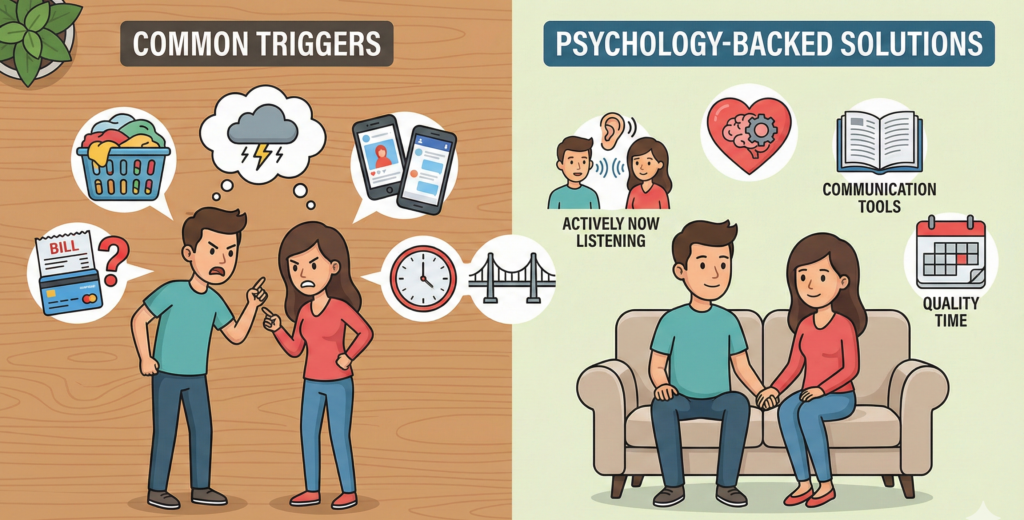
Couples fight most commonly due to unmet emotional needs, communication breakdowns, financial disagreements, and household responsibility issues. Psychology-backed approaches like active listening, empathic communication, cognitive reframing, and emotional validation can transform conflicts into opportunities for deeper connection and healthier relationships.
Many fights among couples arise not from major betrayals but from smaller, more frequent triggers rooted in emotional needs. These include:
Communication breakdowns: misunderstandings due to tone, attitude, or emotional invalidation.
Financial friction: differences in spending habits, income disparities, debt management, and financial transparency.
Household responsibilities: perceived unfairness in chore division and unclear expectations.
Unmet emotional needs: feeling unappreciated, emotionally disconnected, insecure, or controlled creates a psychological pressure cooker that can escalate minor disagreements.
Several research-backed strategies help couples manage and resolve conflicts effectively:
Active and empathic listening: Fully attending to your partner’s emotions and words without interrupting promotes understanding and reduces defensiveness. This builds emotional safety crucial for positive interactions.
Using “I” statements: Expressing feelings from a personal perspective invites compassion and decreases blame, aiding more constructive conversations.
Cognitive reframing: Training the brain to focus on positive aspects of the relationship helps shift perspectives from frustration to appreciation.
Emotional validation and openness: Regularly discussing emotional needs and being vulnerable fosters trust and connection, preventing emotional withdrawal.
Healthy conflict resolution skills: Establishing clear boundaries about acceptable ways to argue, taking breaks during heated moments, and seeking compromise enhance relationship resilience.
Viewing conflicts as signals of unmet emotional needs rather than just problems promotes empathy and proactive care. Partners who respond with validation and support rather than criticism create secure attachments that deepen intimacy. Therapeutic approaches like emotionally focused therapy (EFT) guide couples to identify emotional triggers and rebuild trust through meaningful communication channels.
By recognizing the common triggers of fights and applying psychology-backed communication and emotional strategies, couples can move toward healthier, more fulfilling relationships with less conflict and greater mutual understanding.
This blog covers fundamental reasons why couples fight and how science-based solutions can nurture better partnerships for the long term.