
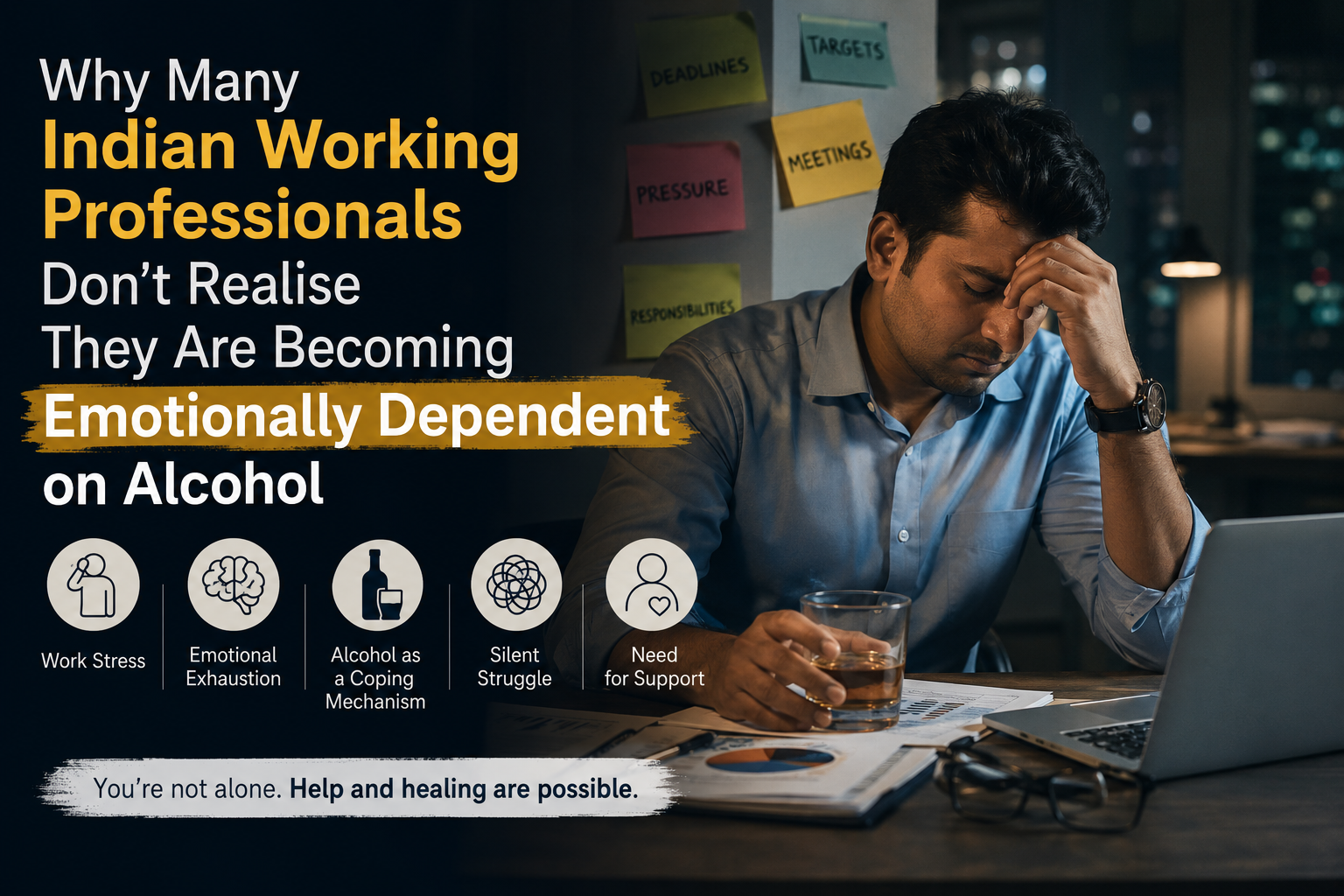
For many working professionals in India, alcohol does not enter life as a “problem.” It enters as a reward, a social tool, a stress reliever, or simply a way to pause after another exhausting day. A drink after work, weekend parties, client dinners, office celebrations, business travel, or late-night socialising slowly become part of routine urban life.
That is exactly why emotional dependence on alcohol often goes unnoticed.
Most professionals who struggle with alcohol dependency are not unemployed, isolated, or visibly out of control. Many are successful, educated, financially stable, and functioning normally on the outside. They continue attending meetings, meeting deadlines, managing teams, travelling for work, and fulfilling responsibilities. Because life appears “under control,” the emotional reliance on alcohol quietly grows in the background.
In India’s fast-moving professional culture, this pattern has become increasingly common — especially among people dealing with chronic stress, emotional exhaustion, loneliness, burnout, anxiety, and pressure to constantly perform.
Not everyone who drinks socially is addicted. The concern begins when alcohol slowly becomes emotionally necessary.
Many professionals begin using alcohol not for enjoyment, but for relief.
Over time, the mind starts associating alcohol with emotional comfort.
This is emotional dependence.
A person may still appear disciplined and productive, but internally they begin feeling:
Because these thoughts sound socially acceptable, professionals often fail to recognise that dependency is developing.
Modern corporate culture rewards productivity, availability, and performance. Many professionals work long hours with little emotional recovery.
Deadlines, targets, competition, job insecurity, appraisals, financial responsibilities, and career expectations create continuous mental pressure. In cities like Gurugram, Bengaluru, Mumbai, Hyderabad, Pune, and Delhi, the “always available” work culture has become normal.
Many people never truly switch off from work.
Alcohol starts becoming a quick emotional escape from this constant pressure.
Initially, it feels harmless:
But over time, the brain begins depending on alcohol to regulate emotions.
In many Indian households, professionals are taught to focus on achievement, not emotional wellbeing.
People openly discuss:
But very few discuss:
As a result, many professionals do not even realise they are emotionally overwhelmed. Instead of addressing stress directly, they manage symptoms through alcohol.
This creates a dangerous cycle:
Stress → Drinking → Temporary Relief → Emotional Avoidance → Increased Dependence
One of the biggest reasons emotional dependence goes unnoticed is because the person continues functioning.
They still:
In India, addiction is often stereotyped as extreme or visibly destructive. Many people assume:
But emotional dependence develops much earlier than severe physical addiction.
A person can be emotionally dependent while still appearing completely “normal” to others.
For many professionals, drinking is connected with:
Refusing alcohol can sometimes even feel socially uncomfortable.
Phrases like:
make excessive drinking appear normal and harmless.
Over time, alcohol stops being occasional and starts becoming routine emotional support.
Many young professionals live away from family support systems. Even people surrounded by colleagues and social media interactions often feel emotionally isolated.
Long work hours, traffic, digital overload, relationship struggles, and lack of meaningful emotional connection create silent loneliness.
Alcohol often becomes:
Unfortunately, emotional relief through alcohol is temporary. The underlying stress, anxiety, or emptiness usually returns stronger later.
Many professionals ignore early warning signs because they do not match the stereotype of “serious addiction.”
Some subtle but important signs include:
These signs may appear mild initially, but they often indicate growing psychological dependence.
Many professionals believe alcohol helps reduce stress or anxiety. In reality, long-term alcohol dependence often worsens mental health.
It can contribute to:
Alcohol may temporarily calm the nervous system, but repeated dependence disrupts emotional regulation over time.
This creates another cycle:
Stress → Alcohol → Temporary Relief → Poor Sleep & Anxiety → More Alcohol
One of the earliest areas affected by emotional dependence is personal relationships.
Professionals dealing with alcohol dependence may become:
Partners and family members often notice changes before the individual does.
Common relationship issues include:
Children are also deeply affected by emotionally unavailable or stressed parents, even when addiction is hidden.
Many Indian professionals avoid counselling or treatment because of:
Some also compare themselves with more severe addiction cases and assume:
But addiction recovery becomes easier when addressed early.
Seeking help early does not mean someone has “failed.” It means they are recognising unhealthy emotional patterns before they become more damaging.
De-addiction counselling is not only about stopping alcohol consumption. It is about understanding the emotional reasons behind dependence.
Counselling helps professionals:
Most importantly, counselling creates a non-judgemental space where people can openly discuss emotional struggles they may have hidden for years.
Many professionals avoid treatment because they fear:
In reality, untreated emotional dependence often damages professional performance far more over time.
Recovery helps people:
Seeking help is not a sign of weakness. It is a step towards regaining emotional control.
Emotional dependence on alcohol rarely begins dramatically. It develops quietly through stress, emotional exhaustion, loneliness, pressure, and unhealthy coping patterns.
For many Indian working professionals, alcohol becomes less about enjoyment and more about emotional survival.
That is the real danger.
A person may continue functioning externally while struggling internally for months or even years. The earlier these patterns are recognised, the easier recovery becomes.
Mental health, emotional wellbeing, and addiction recovery deserve the same seriousness as physical health and career growth. Success at work cannot replace emotional balance, healthy relationships, peace of mind, or long-term wellbeing.
Sometimes the strongest thing a professional can say is not “I can handle it,” but “I need support.